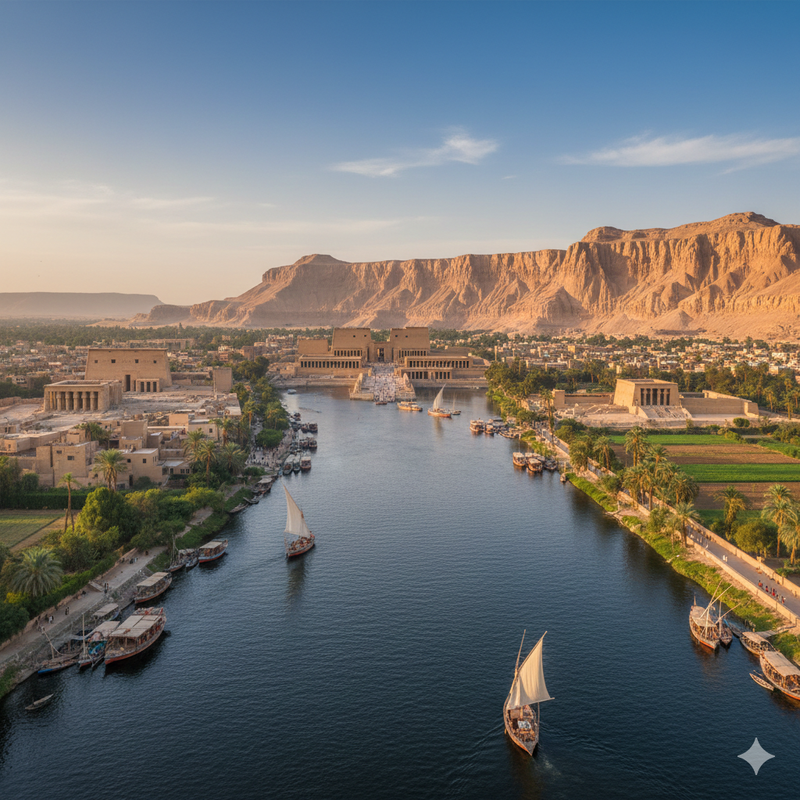
"Called 'Waset' (The Scepter) by the Egyptians and 'Thebes of the Hundred Gates' by Homer, this city was the beating heart of the Egyptian Empire. For over 500 years during the New Kingdom, it was the wealthiest and most majestic city on Earth."
Thebes (modern-day Luxor) lies on the Nile about 675 km south of Cairo. Rising to prominence during the Middle Kingdom, it reached its zenith in the New Kingdom (c. 1550–1070 BCE). As the seat of the powerful god Amun-Ra, wealth from foreign conquests flowed into its temples, creating architectural wonders that still stand today. The Greeks named it Thebes, while later Arab travelers, stunned by its ruins, called it Al-Uqsur (The Palaces), which became Luxor.
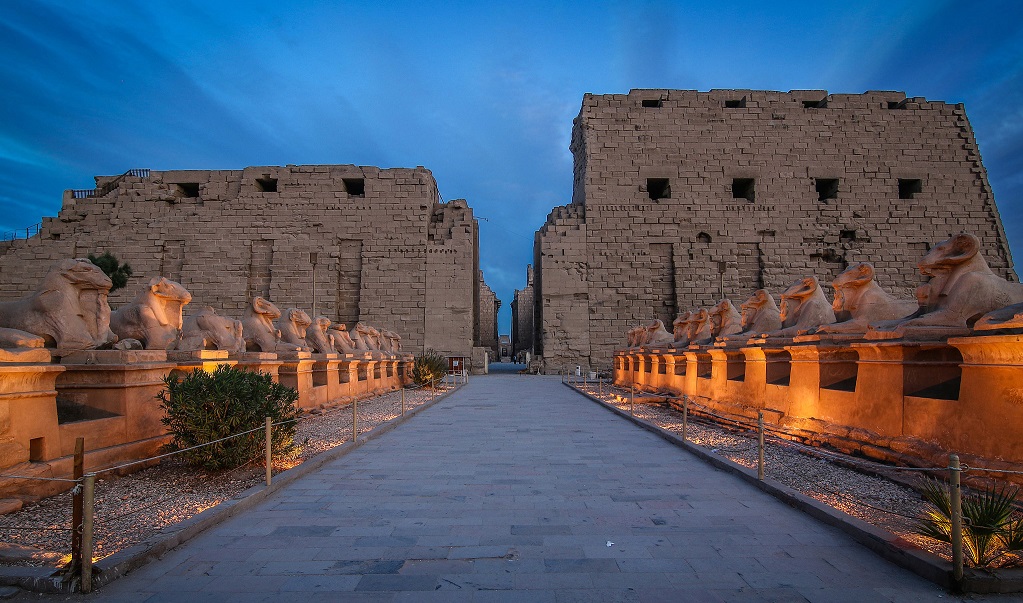
The East Bank: Realm of the Gods
The East Bank was the city of the living, where the sun rose. It housed the royal palaces and the massive temples dedicated to the state gods.
1. The Karnak Temple Complex
The largest religious building ever constructed. Known as Ipet-isut ("The Most Selected of Places"), it was the main sanctuary of the Theban Triad (Amun, Mut, and Khonsu). Every Pharaoh wished to add to it, resulting in a complex that spans over 1,500 years of construction.
- Hypostyle Hall: A forest of 134 gigantic columns, some 24 meters high, representing the primeval papyrus swamp of creation.
- Sacred Lake: Used by priests for ritual purification before entering the holy sanctuary.
2. Luxor Temple
Built largely by Amenhotep III and Ramses II, this temple was connected to Karnak by the 3-kilometer Avenue of Sphinxes. It was the setting for the Opet Festival, a grand annual procession where the statues of Amun, Mut, and Khonsu traveled from Karnak to Luxor to regenerate the Pharaoh's divine power.
The Theban Triad: Guardians of the City
Amun-Ra
The "King of Gods." Originally a local deity, he merged with the sun god Ra to become the supreme state god of the empire. He is depicted with a double-plumed headdress.
Mut
The mother goddess and wife of Amun. Her name means "Mother." She is often depicted wearing the double crown or as a lioness.
Khonsu
The moon god and son of Amun and Mut. He was the god of time and travel, often depicted as a mummy or a falcon wearing a moon disk.
The West Bank: Realm of Osiris
Across the Nile, where the sun set, lay the vast necropolis of Thebes. Pharaohs of the New Kingdom abandoned the pyramid form (which was easily looted) for hidden rock-cut tombs deep in the desert cliffs.
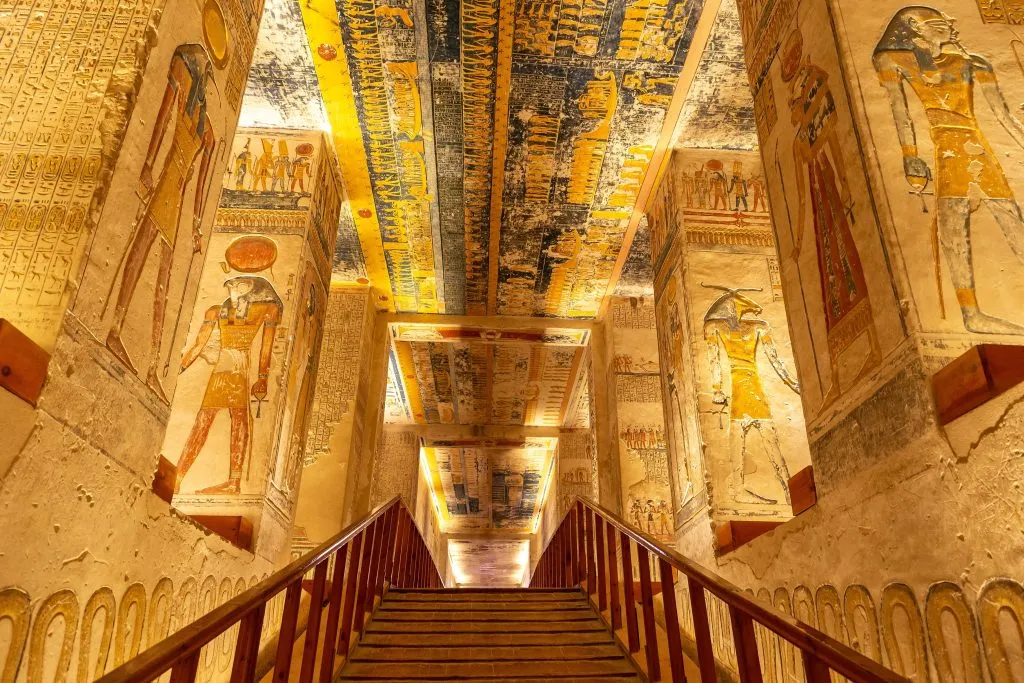
-
Valley of the Kings: The burial place of rulers from the 18th to 20th Dynasties, including Tutankhamun, Seti I, and Ramses II. The tombs are famous for their vivid wall paintings depicting the journey to the afterlife.
-
Temple of Hatshepsut (Deir el-Bahari): A masterpiece of ancient architecture, this mortuary temple rises in three terraces from the desert floor into the cliffs.
-
Colossi of Memnon: Two massive stone statues of Amenhotep III, the only remains of his once-massive mortuary temple destroyed by earthquakes.
-
Valley of the Queens: Known as Ta-Set-Neferu ("The Place of Beauty"), containing the stunning tomb of Queen Nefertari.