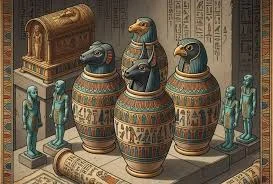
"Man is not just a body. He is a constellation of parts—physical and spiritual—woven together by magic. To die is to unravel; to be reborn is to knit these parts back together in the presence of the gods."
To the Ancient Egyptians, a human being was not a single entity but a complex composite of several parts. Death was the dangerous separation of these parts. For a person to achieve eternal life in the Field of Reeds, these components had to be sustained, protected, and eventually reunited. Understanding these elements is essential to grasping the purpose behind mummification, tombs, and offerings.
The Physical Self
1. Khat (The Physical Body)
The Khat was the physical vessel that housed the soul during life. After death, it became a lifeless corpse.
Crucial Need: Preservation. If the Khat decayed or was destroyed, the spiritual parts (Ka and Ba) would have no home to return to, resulting in the "Second Death" (total non-existence). This fear drove the development of mummification to turn the corpse into a Sah (noble mummy) that could last forever.
2. Ib (The Heart)
To the Egyptians, the heart (not the brain) was the seat of emotion, thought, will, and memory. It was the key to the afterlife.
Crucial Need: Protection. The heart was left inside the mummy during embalming. It recorded all the deeds of a person's life and was weighed against the Feather of Ma'at (Truth) in the final judgment.
The Spiritual Components
3. Ka (The Double)
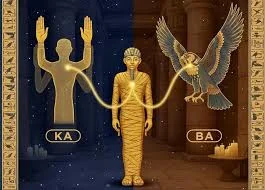
The Ka was the "life force" or spiritual double created at the same time as the body. It distinguished a living person from a dead one.
Role: After death, the Ka continued to live but required sustenance. It lived in the tomb (the House of the Ka) and consumed the spiritual essence (kau) of the food and drink offerings left by family or priests.
4. Ba (The Personality)
The Ba was everything that made a person unique—their personality and character. It was depicted as a bird with a human head.
Role: Mobility. Unlike the Ka which stayed in the tomb, the Ba could fly out during the day to watch over the living family or travel with the sun god Ra. However, it must return to the mummy (Khat) every night to rest.
5. Akh (The Transfigured Spirit)
The Akh was the goal. It was not a part you were born with, but a state you achieved. When the Ka and Ba were successfully reunited after passing the Judgment of Osiris, the deceased became an Akh ("The Effective One").
Role: The Akh lived among the stars (the Imperishable Ones) and the gods, possessing magical powers to affect the world of the living (for good or bad).
Identity & Protection
6. Ren (The Name)
A person's name was their identity. As long as the name was spoken or written, the person continued to exist.
Danger: If a name was chiseled off a tomb or forgotten, the soul would wither and die. This is why kings (like Thutmose III against Hatshepsut) would erase the names of their rivals—to kill them eternally.
7. Sheut (The Shadow)
A person cannot exist without a shadow, so the shadow (Sheut) contained a part of their essence.
Role: A silent companion that required protection. It was often depicted as a small black silhouette accompanying the Ba soul.