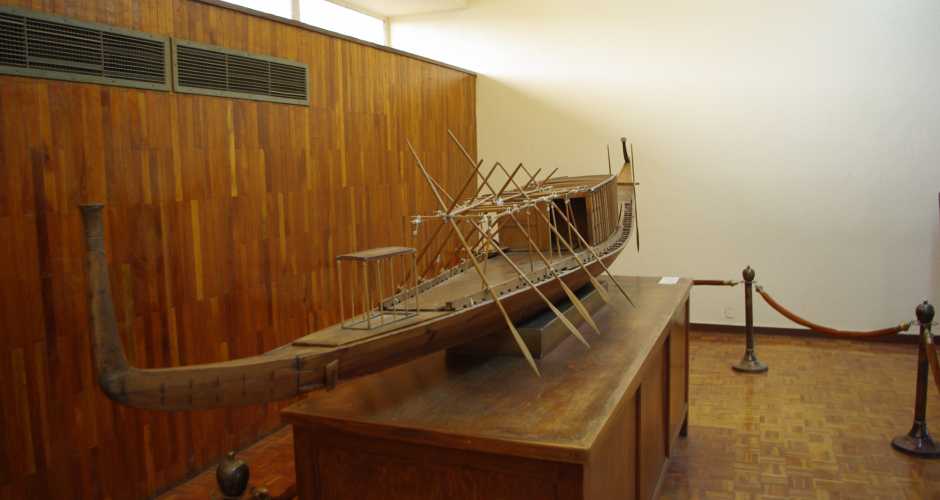
"Every sunset was a death; every sunrise was a victory. The universe did not run automatically—it had to be fought for, every single night, in the dark waters of the Duat."
To the Ancient Egyptians, the sun was not merely a celestial body; it was the god Ra, the source of all life. His daily journey across the sky and his nightly voyage through the underworld represented the eternal cycle of birth, death, and rebirth. It was the cosmic engine that kept Ma'at (order) in balance and held back the forces of chaos.
The Two Boats of Ra
Ra did not use a single vessel. He transferred between two distinct boats to match the phases of his journey.
Mandjet (The Day Barque)
The "Boat of Millions of Years." Ra sailed this vessel across the sky from sunrise to sunset. The dead souls of the righteous (the Akhs) served as his crew, rowing him across the heavenly Nile.
Mesektet (The Night Barque)
At sunset, Ra died and entered the western horizon. He transferred to this boat to navigate the subterranean river of the Duat. Here, he took the form of a ram-headed god (Auf-Ra), representing the flesh of the dead sun.
The Battle with Apophis
The underworld was not empty. It was inhabited by Apophis (Apep), a colossal serpent of chaos who sought to swallow the sun and plunge the world into eternal darkness.
Every night at the 7th Hour, the solar barque encountered Apophis. A ferocious battle ensued.
- The Defenders: Ra was protected by a powerful entourage, including Seth (who speared the serpent), Mehen (a coiled snake god), and the magic of Isis and Thoth.
- The Deceased's Role: The souls of the dead joined this battle. By helping to defeat Apophis, they participated in the cosmic renewal, ensuring their own safety and the rising of the sun the next morning.
Dawn: The Victory of Life
As the barque reached the end of the 12th hour, the serpent was defeated (but never destroyed; chaos is eternal). Ra was transformed. He was no longer the old, dying ram. He emerged on the eastern horizon as Khepri, the scarab beetle pushing the sun disk, symbolizing resurrection and becoming.
This daily victory proved that Ma'at had triumphed over Isfet, and life would continue for another day.