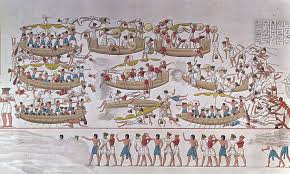
"The foreign countries made a conspiracy in their islands. All at once the lands were removed and scattered in the fray... No land could stand before their arms. But the heart of this monarch (Ramesses III) is furious; he is like a lion." – Inscription at Medinet Habu.
In the 12th century BCE, the Bronze Age world was collapsing. The Hittite Empire fell, Mycenaean Greece vanished, and city-states across the Mediterranean burned. The destroyers were a mysterious confederation known as the Sea Peoples. They swept south like a tsunami, aiming to settle in the fertile lands of Egypt. Only one Pharaoh stood in their way: Ramesses III.
A Confederation of Chaos
Egyptian records list several groups, including the Sherden, Peleset (Philistines), Tjeker, and Shekelesh. They were a migrating horde, bringing their families and ox-carts with them, desperate for land and resources. They were not just raiders; they were settlers.
The First Naval Battle in History
Ramesses III knew he couldn't just fight them on land; they were coming by sea as well. He set a trap in the mouths of the Nile Delta.
The Trap
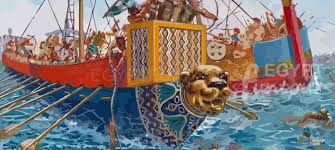
The Egyptians lined the shores with archers. As the Sea Peoples' ships entered the Nile, the Egyptian navy attacked. The Egyptians had a crucial advantage: their ships had oars, allowing them to maneuver, while the invaders relied on sails. Egyptian archers rained arrows on the enemy vessels, and grappling hooks were used to capsize them. It was a massacre.
Those who made it to shore were met by the elite infantry and chariotry. Ramesses III proudly declared: "Those who reached my boundary, their seed is not... their hearts and souls are finished."
Victory and Decline
Ramesses III saved Egypt from the destruction that befell its neighbors. However, the war drained the treasury. The "victory" was the last great military triumph of the New Kingdom.
Some of the defeated Sea Peoples (like the Peleset) were allowed to settle in Canaan, eventually becoming the Philistines of the Bible. The economic strain of the war contributed to the first recorded labor strike in history during Ramesses III's reign.