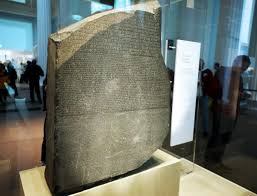
"For 1,400 years, the voices of the Pharaohs were silent. The meaning of the hieroglyphs had been lost to time. Then, in the heat of the Egyptian desert in 1799, a single stone was found that would change history forever."
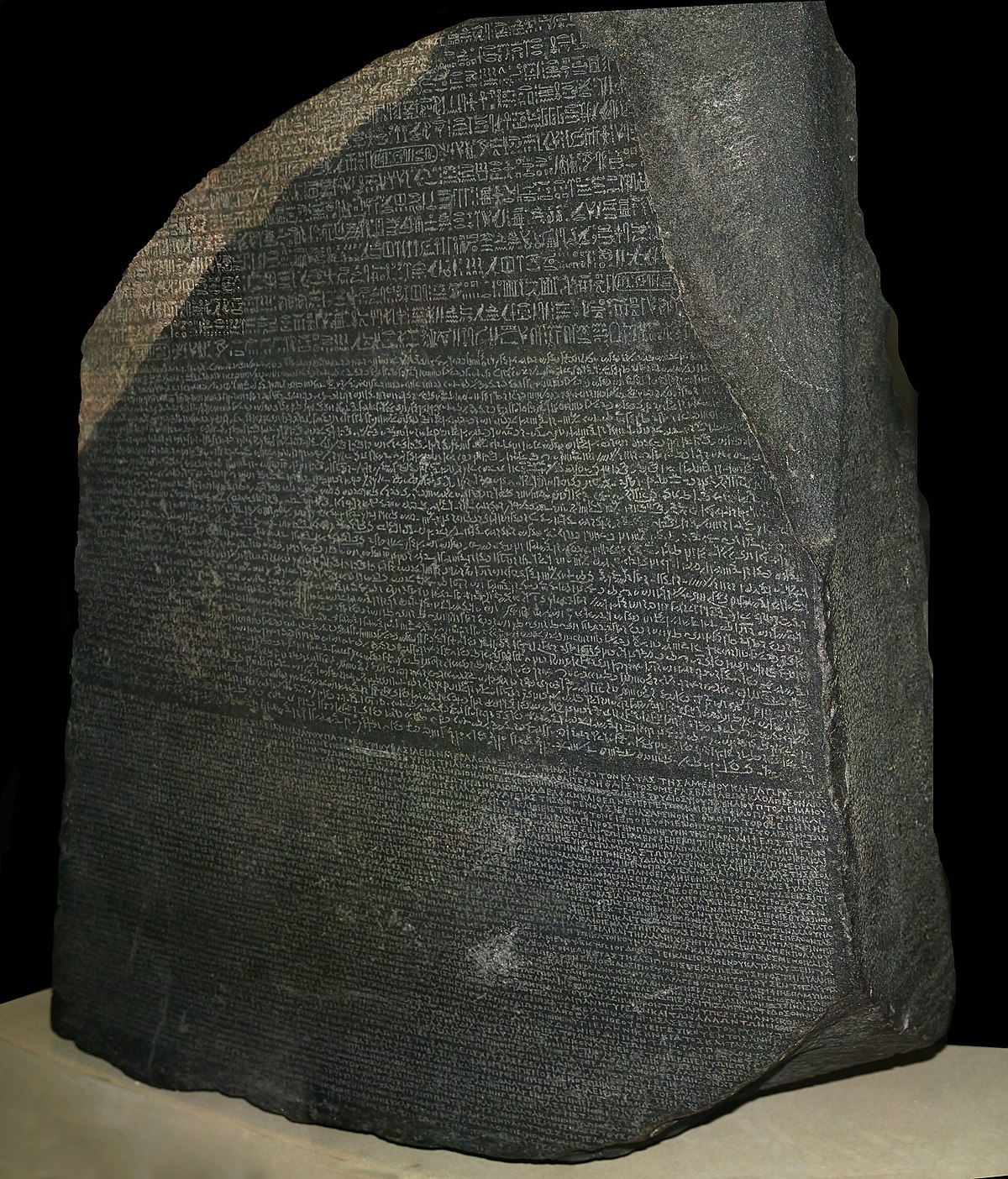
The Rosetta Stone is a stele composed of granodiorite (a rock similar to granite) inscribed with three versions of a decree issued in Memphis, Egypt, in 196 BC during the Ptolemaic dynasty on behalf of King Ptolemy V Epiphanes. Its discovery was the crucial breakthrough in deciphering Egyptian hieroglyphs.
The Accidental Discovery (1799)
The stone was not found by archaeologists, but by soldiers. During Napoleon Bonaparte's campaign in Egypt, French soldiers were rebuilding a fort (Fort Julien) near the town of Rashid (Rosetta) in the Nile Delta.
Lieutenant Pierre-François Bouchard spotted a slab of stone built into an old wall. He realized its potential value because it contained three distinct sections of writing. Though the British defeated the French in 1801 and confiscated the stone (taking it to the British Museum), copies of the text had already been sent to scholars across Europe.
One Text, Three Scripts
The stone is unique because it displays the same message in three different scripts, allowing scholars to use the known language (Greek) to decipher the unknown ones.
1. Hieroglyphs
(Top Section)
The "Script of the Gods." Used for religious documents and monumental inscriptions. Only 14 lines survived on the broken stone.
2. Demotic
(Middle Section)
The "Script of the People." The everyday handwriting used in Egypt at the time. It looks like cursive and flows from right to left.
3. Ancient Greek
(Bottom Section)
The language of the administration. Since the Ptolemaic rulers were of Greek origin, their official decrees were written in Greek. This was the key scholars could read.
The Race to Decipherment
For 20 years, the best minds in Europe struggled with the stone.
- Thomas Young (England): A polymath who made the first major breakthrough. He realized that the cartouches (ovals) in the hieroglyphic text contained the phonetic name of the King: Ptolmys (Ptolemy).
- Jean-François Champollion (France): A linguistic genius who took it further. In 1822, he realized that hieroglyphs were not just symbolic (ideograms) but also phonetic (representing sounds), and that this system was used not just for foreign names, but for the Egyptian language itself. He famously shouted "Je tiens l'affaire!" ("I've got it!") before fainting from exhaustion.
The Memphis Decree
Ironically, the text itself is relatively mundane. It is a decree passed by a council of priests affirming the royal cult of the 13-year-old King Ptolemy V on the first anniversary of his coronation.
It lists the good deeds of the King: he cut taxes, forgave debts, restored temples, and freed prisoners. In return, the priests agreed to erect a statue of the King in every temple and to celebrate his birthday annually.