"Egypt was the laboratory where humanity learned to tame water. The systems of irrigation, measurement, and state planning developed along the Nile became the blueprint for river-based civilizations across the Mediterranean and beyond."
The influence of the Nile extends far beyond the borders of Egypt. The Egyptian mastery of hydraulic engineering—canals, dykes, and the Shaduf—inspired Greek scientists and Roman engineers. The Nile model proved that water resources could be managed on a national scale to create stability and empire.
The Blueprint for River Civilizations
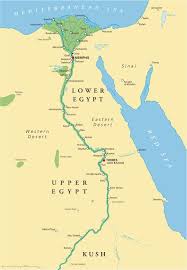
Ancient Egypt established the first successful model of a Hydraulic Civilization—a state whose power structure is based on the control of water.
- Centralized Planning: The need to coordinate the flood across hundreds of miles necessitated a strong central government, creating the world's first nation-state bureaucracy.
- Surveying and Geometry: The annual need to re-measure fields after the flood waters receded led to the invention of geometry (literally "earth-measuring"), which the Greeks later adopted and formalized.
Teaching the West
When Greek scholars like Herodotus, Thales, and Pythagoras visited Egypt, they were astounded by the water management systems.
The Archimedes Screw
The famous Greek mathematician Archimedes is believed to have invented his water screw after studying Egyptian irrigation methods during his time in Alexandria. This device, used to pump water against gravity, is a direct descendant of Egyptian hydraulic ingenuity.
The Romans: Rome looked to the Nile not just for grain, but for engineering. The Roman administration of water rights and aqueduct maintenance was heavily influenced by the Egyptian system of Nilometers and state-controlled distribution.
Feeding Empires
For centuries, the surplus grain of the Nile fed the populations of Rome and later Constantinople. The "Annona" (grain dole) that kept the Roman mob fed and peaceful was entirely dependent on the fleets arriving from Alexandria.
In this way, the Nile did not just sustain Egyptian culture; it physically sustained Western civilization during its formative years.