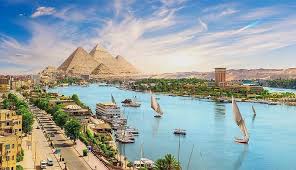
The Nile River was the single most important natural force shaping Ancient Egyptian civilization. It was not merely a river, but the foundation of life, economy, religion, politics, and cosmic order (Ma'at). Without the Nile, Egypt would be nothing but endless desert.
Flowing north for over 6,600 kilometers, the Nile is the longest river in the world. For the Ancient Egyptians, it was the umbilical cord of their existence, dividing their world into two distinct realms: Kemet (The Black Land) and Deshret (The Red Land).
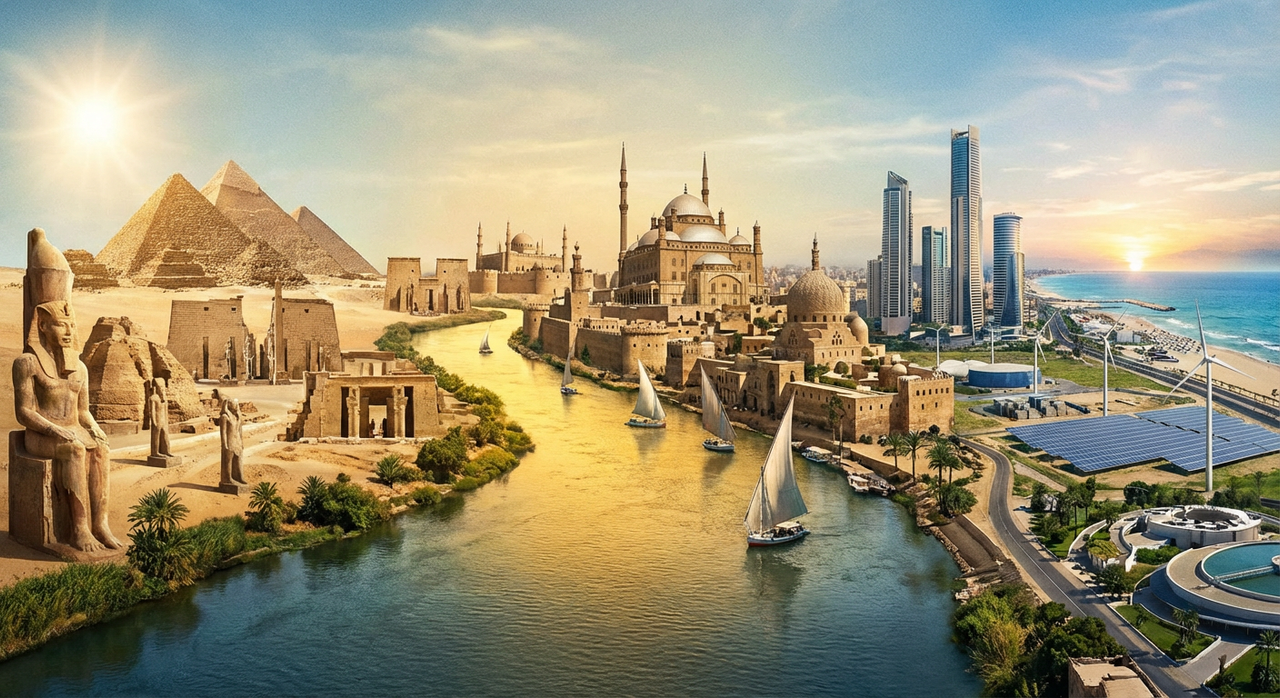
The Miracle of the Flood
The Egyptian calendar and life revolved around the annual flood, or Akhet. Unlike the destructive floods of Mesopotamia, the Nile's flood was predictable and gentle.
Hapi: The River God
The flood was personified by the god Hapi, depicted as a plump figure with blue skin (representing water) and breasts (representing fertility), bringing abundance to the land.
The Black Land (Kemet)
When the waters receded, they left behind a thick layer of nutrient-rich black silt. This soil (Kemet) allowed farmers to grow wheat, barley, and flax in the middle of a desert, feeding an empire.
A Highway of Unity
The Nile flows north (downstream), but the prevailing wind blows south (upstream). This geographical miracle made the Nile a perfect two-way highway.
- Transportation: It allowed for the easy movement of armies, massive stone blocks for pyramids, and trade goods.
- Political Unity: The river connected Upper Egypt (the Valley) and Lower Egypt (the Delta), allowing a centralized government to rule a vast territory effectively.
A Reflection of the Heavens
The Egyptians believed the Nile was a mirror of the celestial river (the Milky Way) on which the sun god Ra sailed his barque.
The reliability of the river reinforced the concept of Ma'at (Cosmic Order). The sun rose every day, and the river flooded every year. If the flood failed (leading to famine) or was too high (destroying villages), it was seen as a disruption of Ma'at and the anger of the gods.