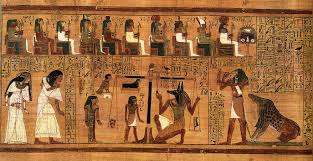
"I have not committed sin... I have not stolen... I have not lied. I am pure! I am pure! I am pure!" – The Negative Confession (Spell 125).
The climax of the journey through the underworld was the arrival at the Hall of Judgment (also called the Hall of Two Truths or Ma'at). Here, the deceased stood before Osiris, the Lord of the Dead, and a tribunal of 42 judges to face the ultimate test of character.
The Tribunal of 42 Judges
Before the weighing could begin, the deceased had to recite the Negative Confession. They had to address each of the 42 divine judges by name and deny committing specific sins.
- "O Wide-Strider who comes from Heliopolis, I have not told lies."
- "O Fire-Embracer who comes from Kheraha, I have not stolen."
- "O Nosey who comes from Hermopolis, I have not been arrogant."
This declaration proved that the soul was pure and fit to enter the presence of the gods.
The Scales of Justice
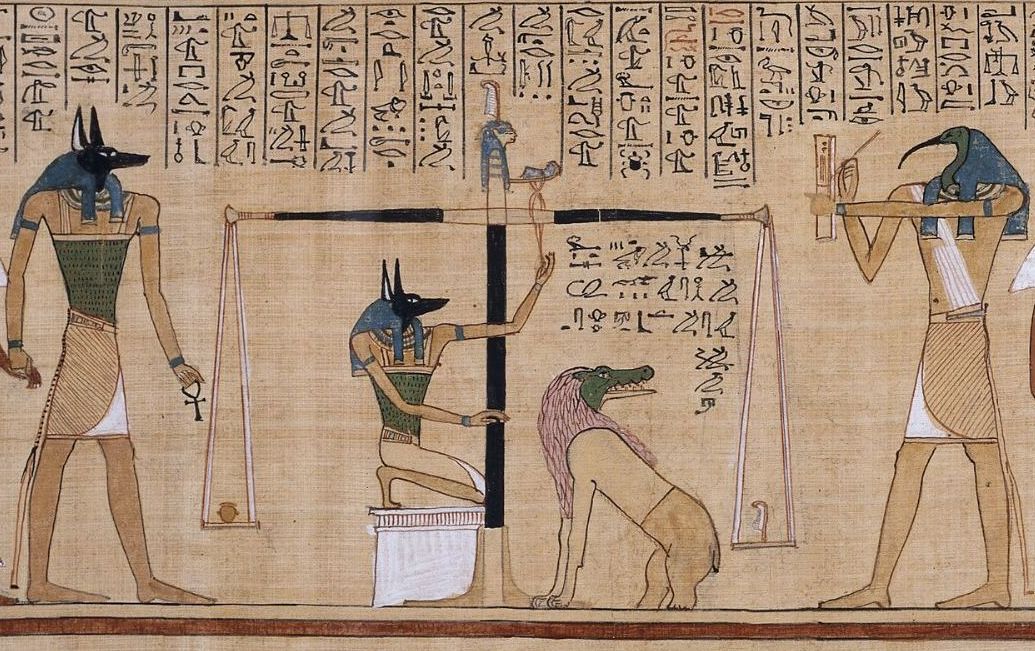
In the center of the hall stood a great scale. On one side, Anubis (the jackal-headed god) placed the Heart (Ib) of the deceased. On the other side, he placed the Feather of Ma'at, representing truth, order, and cosmic balance.
Thoth (the ibis-headed god of wisdom) stood by to record the result. The tension was absolute. The heart contained the record of every deed done in life—it could not lie.
The Verdict: Life or Oblivion
Success (Maa Kheru)
If the heart balanced perfectly with the feather, the deceased was declared "True of Voice." Horus would lead them to Osiris, and they would be granted entry into the Field of Reeds (Paradise) to live eternally.
Failure (The Second Death)
If the heart was heavier than the feather (weighed down by sin), it was thrown to Ammit, "The Devourer of the Dead." This terrifying beast (part lion, part hippo, part crocodile) would eat the heart, resulting in total non-existence—the worst fate imaginable for an Egyptian.
Ammit: The Eater of Souls
Ammit sat beneath the scales, waiting hungrily. She was not a god to be worshipped, but a demon to be feared. She represented the chaos that threatened to consume order. The fact that the Egyptians included her in the scene emphasizes the high stakes of living a moral life; judgment was real, and failure was final.