"O Heart of my mother... do not stand against me as a witness! Do not oppose me in the tribunal!" – from the Spell of the Heart Scarab.
The journey to the afterlife was fraught with demons, fire, and gates. To survive, the deceased needed more than just a tomb; they needed magical armor. This came in the form of amulets (Heka) and specialized equipment designed to serve them in eternity.
In Ancient Egypt, jewelry was never just for decoration. Every piece had a protective function. Amulets were wrapped within the layers of the mummy's bandages to protect specific parts of the body and soul.
The Magical Arsenal (Amulets)
The Heart Scarab
The most critical amulet. Placed over the heart, it was inscribed with Spell 30B from the Book of the Dead. It commanded the heart not to betray the owner's secrets or sins during the Weighing of the Heart ceremony.
The Wedjat Eye (Eye of Horus)
Representing the healed eye of Horus after his battle with Seth, this symbol embodies healing, wholeness, and protection. It was placed over the incision made by the embalmers to magically heal the wound.
The Djed Pillar
Resembling a tree trunk or a backbone, it represents the spine of Osiris and symbolizes stability and endurance. It was placed on the mummy's neck to ensure the deceased could stand upright in the afterlife.
The Tyet (Knot of Isis)
Made of red jasper or carnelian, it represents the blood of Isis and her protective power. It was often paired with the Djed pillar to provide the protection of both Osiris and Isis.
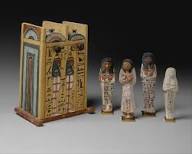
Shabtis: The Answerers
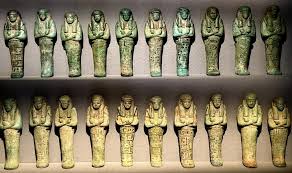
The afterlife was an idealized version of Egypt, which meant there was still work to be done—farming, irrigating, and plowing. To avoid this labor, the deceased took small servant statues called Shabtis (or Ushabtis) with them.
Inscribed with Spell 6 from the Book of the Dead, these figures were commanded to "answer" when the roll call for work was made.
"If I am called upon to do work... you shall say: 'Here I am!'"
Ideally, a person would have 365 shabtis (one for each day of the year) plus 36 overseer shabtis (one for every 10 days) to manage them.
Models of Daily Life
Especially popular in the Middle Kingdom, wooden models were placed in tombs to magically provide for the deceased's needs. These intricate miniatures depicted:
-
Boats: To allow the soul to travel with the sun god Ra or make pilgrimages to Abydos.
-
Workshops: Bakeries, breweries, and granaries to ensure an eternal supply of bread and beer.
-
Soldiers: Platoons of archers and spearmen to protect the tomb owner.