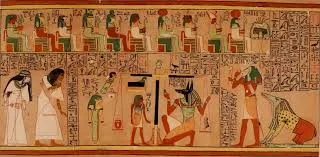
"I have entered the Field of Reeds... I plough there, I reap there, I eat there, I drink there, I make love there. I am in peace." – from the Book of the Dead.
The ultimate goal of every Ancient Egyptian was not to ascend to a cloudy heaven, but to reach Aaru (the Field of Reeds), also known as Sekhet-Aaru. It was a perfected mirror image of Egypt itself—a land of eternal Nile floods, boundless harvests, and unending joy, where sickness and death did not exist.
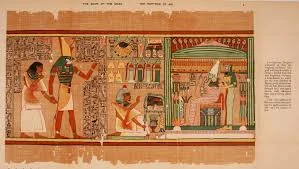
A Perfect Reflection
The Egyptians loved their land so much that they couldn't imagine a paradise better than the Nile Valley. In Aaru:
- Eternal Harvest: The wheat grew five meters tall, and the flax was abundant.
- The Nile: A celestial river flowed through it, ensuring the land was always fertile and lush.
- No Pain: There was no hunger, thirst, or sorrow. The dangerous beasts (crocodiles, hippos) were tame or non-existent.
Reunion with the Beloved
One of the most comforting aspects of Aaru was the promise of reunion.
Upon arrival, the deceased (now an Akh, or transfigured spirit) would be reunited with their ancestors, parents, spouse, and children who had passed before them. They lived in the presence of Osiris, the ruler of this domain, ensuring eternal protection and order (Ma'at).
The Price of Paradise
Entry was not guaranteed. It had to be earned.
Conditions for Entry
- Righteousness: The heart had to be lighter than the Feather of Ma'at in the Hall of Judgment.
- Knowledge: The soul had to know the secret names of the gates and guardians of the Duat to pass through.
- Preservation: The body on earth had to be mummified and intact to anchor the soul.
Eternal Work and the Shabti
Since Aaru was an agricultural paradise, farming was still required. However, the Egyptian elite did not wish to spend eternity laboring in the fields.
To solve this, they were buried with Shabti dolls (Ushabti). These magical figurines were inscribed with a spell commanding them to answer "Here I am!" whenever the deceased was called upon to plow the fields or irrigate the land. The Shabtis would do the work, allowing the deceased to relax, play Senet, and enjoy the afterlife.