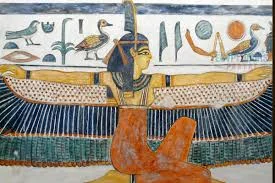
"Ma'at is good and its worth is lasting. It has not been disturbed since the day of its creator... It leads one to blessedness." – The Maxims of Ptahhotep.
In Ancient Egypt, religion was not just about temples and gods; it was about how one lived every single day. The central concept holding the universe together was Ma'at. It represented truth, balance, order, harmony, law, morality, and justice. To live "in Ma'at" was to live in harmony with the cosmos.
Order vs. Chaos
The universe was seen as a constant battleground.
Ma'at (Order)
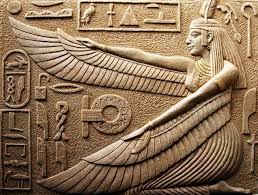
Represented by a goddess wearing a single ostrich feather. It is the rising of the sun, the annual flooding of the Nile, and the honesty of a judge.
Isfet (Chaos)
The force of disorder, lies, and injustice. If Ma'at was lost, Isfet would return the world to the primordial waters of Nun (nothingness).
The Ticket to Eternity
Moral behavior in life was the only ticket to the afterlife. Unlike some religions where faith alone can save you, in Egypt, action mattered.
Upon death, a person's heart was weighed against the Feather of Ma'at. If they had lived a life of balance—feeding the hungry, giving water to the thirsty, and clothing the naked—their heart would be light. If they had caused chaos or suffering, their heart would be heavy with sin and devoured.
The 42 Negative Confessions
In the Hall of Judgment, the deceased did not confess sins (e.g., "I stole"). Instead, they declared their purity (e.g., "I have not stolen"). This list, found in the Book of the Dead, offers a glimpse into Egyptian ethics:
-
"I have not stolen." (Respect for property)
-
"I have not slain people." (Respect for life)
-
"I have not told lies." (Honesty)
-
"I have not caused tears." (Compassion)
-
"I have not polluted the water." (Environmental stewardship)
The Pharaoh's Duty
While every person had to live by Ma'at, the Pharaoh had the supreme duty to "offer Ma'at" to the gods.
Temple reliefs often show the King holding a small statue of the goddess Ma'at and presenting it to the major gods (like Amun or Ra). This symbolized that the King was ruling justly, defending the borders, and maintaining the cosmic order on behalf of humanity.