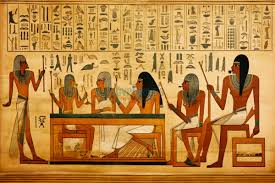
"In Egyptian art, size is not perspective; it is power. A man is not drawn larger because he is closer, but because he is more important. This visual language ensured that every viewer immediately understood the preordained order of the world."
Ancient Egyptian art was not designed to be realistic in the modern sense. It was symbolic and functional. Artists utilized a Hierarchical Scale to reinforce social and cosmic order. This meant that the size of a figure in a painting or relief was determined by their social status, not their physical distance from the viewer.
The Pharaoh as Giant
In battle scenes or temple reliefs, the Pharaoh is always depicted significantly larger than anyone else.
- Dominance: He towers over his enemies, who are often shown as a chaotic, diminutive mass. This visualizes his ability to single-handedly restore Ma'at (order) against the forces of Isfet (chaos).
- Divinity: Even when standing next to his wife or children, the King is larger, emphasizing his semi-divine status compared to mortals. Only the gods are depicted at the same scale as the Pharaoh.
Registers: Organizing the World
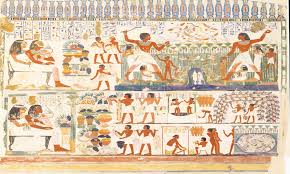
Egyptian art is famously organized into horizontal lines called registers. This was not just an aesthetic choice; it was a way to impose order on the chaotic world.
Reading the Lines
Lower registers usually depict common activities (farming, fishing), while higher registers depict more sacred or important events. The only figure allowed to break these lines is the Pharaoh, showing that his power transcends the boundaries of ordinary life.
Status by Size
This rule applied to everyone:
- Officials: High officials are depicted larger than the scribes and overseers who serve them.
- Laborers: Servants, farmers, and entertainers are shown as the smallest figures, often arranged in identical groups to show their collective function rather than individual identity.
- Exceptions: Wives and children were traditionally shown much smaller than the male tomb owner, sometimes barely reaching his knee, symbolizing their dependence and protection under him.