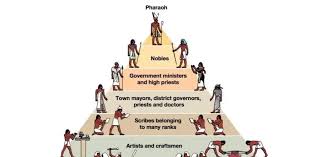
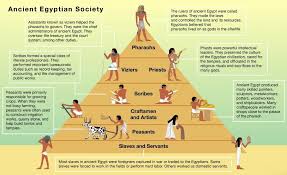
"The structure of Egyptian society can be visualized as a perfect pyramid. At the absolute apex stood the gods, with the Pharaoh serving as their sole intermediary. Below him, the layers descended in prestige but expanded in population size, creating a stable and enduring civilization."
In Ancient Egypt, stability was the highest virtue. The social hierarchy was not seen as a ladder to be climbed, but as a static machine designed by the gods to maintain Ma'at. Every person had a specific role, and fulfilling that role ensured the sun would rise and the Nile would flood.
The Layers of the Pyramid
1. The Peak: Pharaoh & Royal Family
The Pharaoh was not just a king but a god on earth (Horus incarnate). He owned all the land, made all the laws, and defended the country against chaos. His family shared in his divinity and held the highest offices.
2. The Support: Viziers, Priests & Nobles
The Vizier was the Pharaoh's right hand, managing the entire bureaucracy. High Priests controlled the vast temple estates and pleased the gods. Nobles governed the provinces (Nomes) and collected taxes.
3. The Intellect: Scribes & Soldiers
Scribes were the backbone of the administration; they could read and write, recording grain stocks and legal cases. Professional soldiers defended the borders and expanded the empire, gaining status through valor.
4. The Base: Artisans, Merchants & Farmers
Artisans (craftsmen) lived in specialized villages and created the tombs and temples. Merchants traded goods. Farmers, the largest group (80% of the population), worked the land, paid taxes in grain, and provided labor for royal projects during the flood.
A Cycle of Support
The system was based on reciprocity, not just oppression.
- Upward Support: The lower classes supported those above through labor, military service, and taxes (grain, beer, linen).
- Downward Support: In return, the state provided physical security (army), legal protection (courts), infrastructure (irrigation canals), and spiritual sustenance (Ma'at) through the temples.