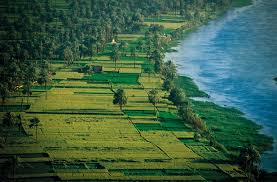
"I shall cause the Nile to swell for you, without there being a year of lack... The fields will laugh, and the riverbanks will wonder." – Promise of Khnum to King Djoser.
In Ancient Egypt, the Pharaoh was not merely a political ruler; he was the bridge between the gods and the people. His primary duty was to maintain Ma'at (cosmic order). Because the Nile's flood was the physical manifestation of Ma'at, the King was held personally responsible for the river's behavior. A good flood was proof of his divinity; a bad flood was a sign of his failure.
The Divine Mandate
To rule Egypt effectively meant controlling the river. The Pharaoh was often depicted as Hapi (the Nile god), binding the plants of Upper and Lower Egypt (the Lotus and Papyrus) together. This imagery reinforced the idea that the political unity of the country depended on the unified flow of the Nile.
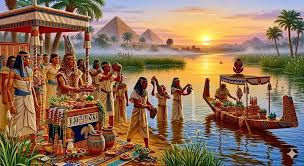
Rituals of the River: The King led annual festivals where he threw offerings (bread, flowers, and statues of Ma'at) into the Nile to "marry" the river and ensure a fertile flood.
A Hydraulic Civilization
The legitimacy of the King was also tied to engineering.
Royal Works
Pharaohs who built canals, dredged the river channels, and strengthened dykes were praised as great rulers. For example, Sesostris III (12th Dynasty) dug a canal through the granite rocks of the First Cataract to allow his fleet to sail south into Nubia, extending Egyptian power.
When the River Failed
If the flood failed for consecutive years, the social contract broke. The people believed the King had lost favor with the gods.
- The Famine Stela: Located on Sehel Island, this inscription tells the story of a seven-year famine during the reign of Djoser. The King had to travel south to the temple of Khnum (god of the Nile source) to offer prayers and gifts before the floods returned.
- Collapse of the Old Kingdom: Historical records suggest that a series of low floods contributed to the anarchy of the First Intermediate Period, leading to the collapse of central authority.