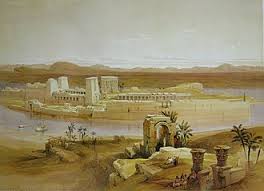
"Hail to thee, O Nile! Who manifests thyself over this land, and comes to give life to Egypt! Mysterious is thy issuing forth from the darkness... Watering the orchards created by Ra, to cause all the cattle to live." – Hymn to the Nile.
The Nile was not just a physical reality for the Ancient Egyptians; it was an artistic muse and a literary theme. From the earliest tomb paintings to the most sacred temple hymns, the river was celebrated as the divine provider of abundance, the bringer of joy, and the guarantor of cosmic order (Ma'at).
The Hymn to the Nile
One of the most famous pieces of Middle Kingdom literature is the Hymn to Hapi (or Hymn to the Nile). It was taught in schools and chanted during the flood festival.
The poem praises the river for its erratic but essential nature. It acknowledges that while the gods in the sky (like Ra) are distant, the Nile is a god present on earth, feeding the people and "making every face glow" with happiness. It captures the deep emotional connection the people felt for their river.
Scenes of Eternal Abundance
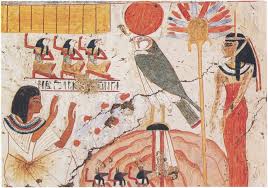
Egyptian art, especially in tombs, was designed to create a magical reality for the afterlife. The Nile was a central theme because it represented the source of food and rebirth.
- Fishing and Fowling: A classic scene shows the tomb owner standing on a papyrus skiff, hunting birds with a throwing stick or spearing fish. This wasn't just sport; it symbolized the triumph of order over the chaos of the wild marshes.
- The Blue Lotus: Art often features the blue lotus flower rising from the river. It was a symbol of the sun god Ra rising from the primordial waters of Nun at the beginning of time.
Metaphor for Life and Death
In literature, the Nile served as a powerful metaphor. The "Crossing of the River" was a euphemism for death—traveling from the East Bank (Life) to the West Bank (The Underworld).
In love poetry, the river often appears as an obstacle separating lovers, or as a cooling refuge where secret meetings take place among the reeds, highlighting its role in the romantic imagination of the people.