"His majesty went forth in his chariot of electrum, armed with his weapons of war, like Horus the Smiter... his soldiers were as numerous as the sand of the shore."
The success of the New Kingdom Empire was built on a revolution in military technology and organization. Gone were the days of simple peasant militias. Egypt developed a professional standing army, equipped with advanced bronze weaponry and the terrifying speed of the chariot corps, organized into divisions under the protection of the gods.
.jpg)
The Four Divisions of the Gods
Under Ramesses II, the army was restructured into four massive corps, each named after a major deity. This not only organized the troops but placed them under divine protection. Each division had about 5,000 men.
- Division of Amun: Based in Thebes. The elite corps often led by the Pharaoh.
- Division of Re: Based in Heliopolis.
- Division of Ptah: Based in Memphis.
- Division of Seth: Based in the Delta (Avaris), composed of fierce warriors honoring the god of chaos and storms.
Organization
Within these divisions were companies of 250 men with names like "Bull of Nubia" or "Manifestation of Justice." They were further supported by the Medjay, elite Nubian scouts and police.
The Tools of War
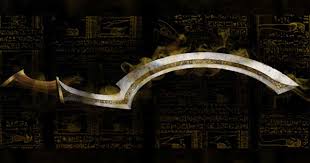
The Khopesh (The Sickle Sword)
The iconic weapon of the Egyptian infantry. Evolving from a battle-axe, the Khopesh was a curved sword made of bronze (and later iron).
- Design: Shaped like a sickle with the cutting edge on the outside curve.
- Function: It was a hacking weapon capable of slashing through limbs or hooking an enemy's shield to pull it away, exposing them to a thrust.
The War Chariot
Adopted from the Hyksos, the Egyptians perfected the chariot. They made it lighter and faster by moving the axle to the rear of the platform.
- Mobile Platform: Unlike Hittite chariots which were heavy shock vehicles with three men, Egyptian chariots carried two men: a driver and an archer. This allowed them to circle the enemy and rain arrows from a distance before the infantry engaged.
Evolution of Armor
In the Old Kingdom, soldiers wore only loincloths. By the New Kingdom, protection became essential.
- Shields: Wooden frames covered with tough cowhide. In the later periods, they became rectangular with a tapered top to protect the face while peeking over.
- Body Armor: Charioteers and officers wore scale armor—hundreds of small bronze plates sewn onto a leather or linen tunic. This offered flexibility while protecting against arrows.
- Helmets: The Khepresh (Blue Crown) was a war helmet made of leather studded with metal discs, worn by the Pharaoh.