
"The sun never sets on the British Empire."
For over two centuries, London was the command center of the largest empire in history, ruling over 412 million people at its peak. It is a city of ancient tradition, royal pageantry, and immense global influence—especially in its complex historical relationship with Egypt.
London, founded by the Romans as Londinium around 43 AD, grew to become the world's most populous city during the Victorian Era. It was the engine of the Industrial Revolution and the financial capital of the world.
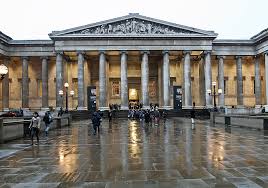
The British Museum: A World of History
Established in 1753, the British Museum was the first national public museum in the world. Its Egyptian collection is the largest and most comprehensive outside of Cairo, housed mainly in the Sculpture Gallery (Room 4).
The Rosetta Stone
Discovered by French soldiers in 1799, this granodiorite stele was surrendered to the British in 1801. It contains a decree by Ptolemy V in three scripts: Hieroglyphic (gods), Demotic (people), and Ancient Greek (administration), providing the key to deciphering ancient Egyptian history.
The Younger Memnon
A colossal 7-ton granite bust of Ramses II from the Ramesseum in Luxor. Its arrival in London in 1818 sparked a sensation and inspired Percy Bysshe Shelley's famous sonnet Ozymandias ("Look on my Works, ye Mighty, and despair!").
Echoes of Egypt in London
The British obsession with Egypt ("Egyptomania") left its mark all over the capital's architecture and public spaces.
- Trafalgar Square: Named after the Battle of Trafalgar, but the column honors Admiral Nelson, the hero of the Battle of the Nile (1798) where he destroyed Napoleon's fleet off the coast of Alexandria, securing British dominance in the Mediterranean.
- Cleopatra's Needle: An ancient Egyptian obelisk (c. 1450 BC) standing on the Victoria Embankment. It survived a near-disastrous sea voyage to reach London in 1878. The Sphinxes flanking it are famously placed facing the "wrong" way (towards the obelisk rather than guarding it).
- Highgate Cemetery: The famous "Egyptian Avenue" features tombs with lotus columns and obelisks, reflecting the Victorian fascination with the Egyptian afterlife.
The Imperial Connection
While never officially a colony, Egypt was under British military occupation and later a "Veiled Protectorate" from 1882 until the Suez Crisis in 1956. This era profoundly shaped modern Cairo and Egyptian politics.
- Lord Cromer: The British Consul-General who effectively ruled Egypt for decades, focusing on financial reforms and cotton production to feed the mills of Manchester.
- Howard Carter: The British archaeologist who, funded by the Earl of Carnarvon (Highclere Castle), made the discovery of the century: the Tomb of Tutankhamun in 1922. While the treasures remained in Egypt, the discovery sparked a worldwide "Tut-mania" centered in London.
The Petrie Museum
Tucked away in University College London is the Petrie Museum of Egyptian Archaeology. Unlike the grand British Museum, this is a study collection established by Sir Flinders Petrie, the "Father of Modern Archaeology." It houses over 80,000 objects, including the world's oldest woven garment (the Tarkhan Dress).
Royal & Political Landmarks
-
Buckingham Palace: The official residence of the British monarch.
-
Palace of Westminster: Home to the Houses of Parliament and Big Ben (Elizabeth Tower), the symbol of British democracy.