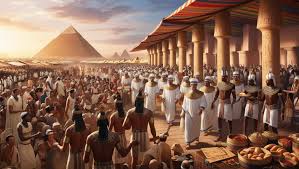
"The King has been taken away by the poor... The land is spinning like a potter's wheel." – The Admonitions of Ipuwer.
The social pyramid of Ancient Egypt was not always stable. During the Intermediate Periods—times of civil war and famine—central authority collapsed. When the Pharaoh was weak, the rigid hierarchy flattened. Local nobles gained supreme power, regional governors (Nomarchs) acted as petty kings, and the common people found new opportunities amidst the chaos.
The Warlords of the Provinces
When the Old Kingdom collapsed (c. 2181 BCE), the God-King in Memphis lost control. The vacuum was filled by the Nomarchs.
- Independence: Governors stopped sending taxes to the capital. They kept the wealth in their own provinces, building their own armies and lavish tombs.
- Competition: Without a central Pharaoh, neighboring cities fought over water rights and land. The hierarchy shifted from a national pyramid to dozens of small, competing pyramids.
Every Man a King
The collapse of royal monopoly had a surprising side effect: the "Democratization of the Afterlife."
Appropriating Royal Rights
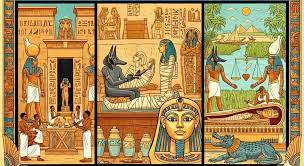
Previously, only the King had the right to certain funerary spells (Pyramid Texts). During the Intermediate Periods, local nobles and wealthy commoners began using these spells on their own coffins (Coffin Texts). They adopted royal titles and symbols of status, claiming a dignity that was once reserved for the divine ruler alone.
The Return of the Pyramid
Chaos could not last forever. Strong leaders eventually emerged to reunite the land (like Mentuhotep II of the Middle Kingdom and Ahmose I of the New Kingdom).
However, the restored hierarchy was never quite the same. The Pharaohs of the Middle Kingdom had to be more politically astute, curbing the power of the Nomarchs while portraying themselves as "Shepherds of the People" rather than distant gods, acknowledging the new social reality.