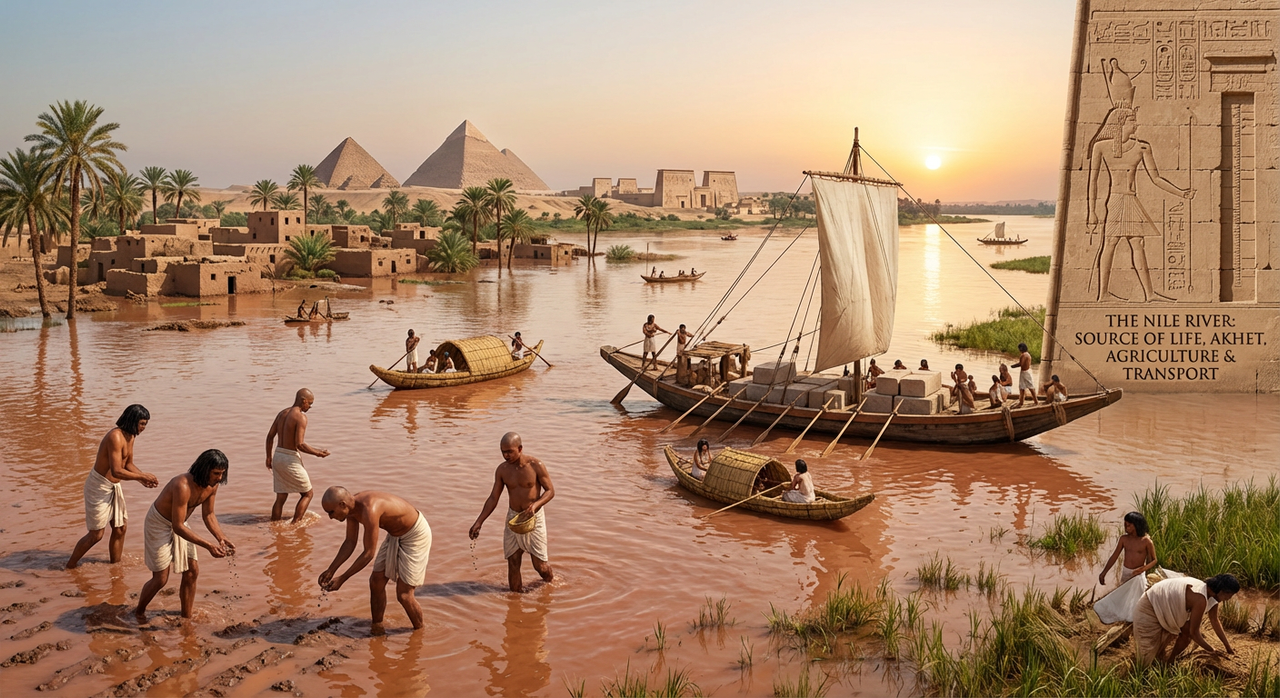
"While Pharaohs built pyramids and scribes recorded history, it was the farmer who fed the gods. Making up 80% of the population, they were the silent, mighty engine that powered the entire civilization."
The farmer (Fellah) was the base of the social pyramid. Without their relentless labor during the planting and harvest seasons, the temples would be empty and the armies unfed. Though they lived modest lives in mudbrick villages, they were not slaves. They were free citizens with rights, families, and a deep connection to the cycle of the Nile.
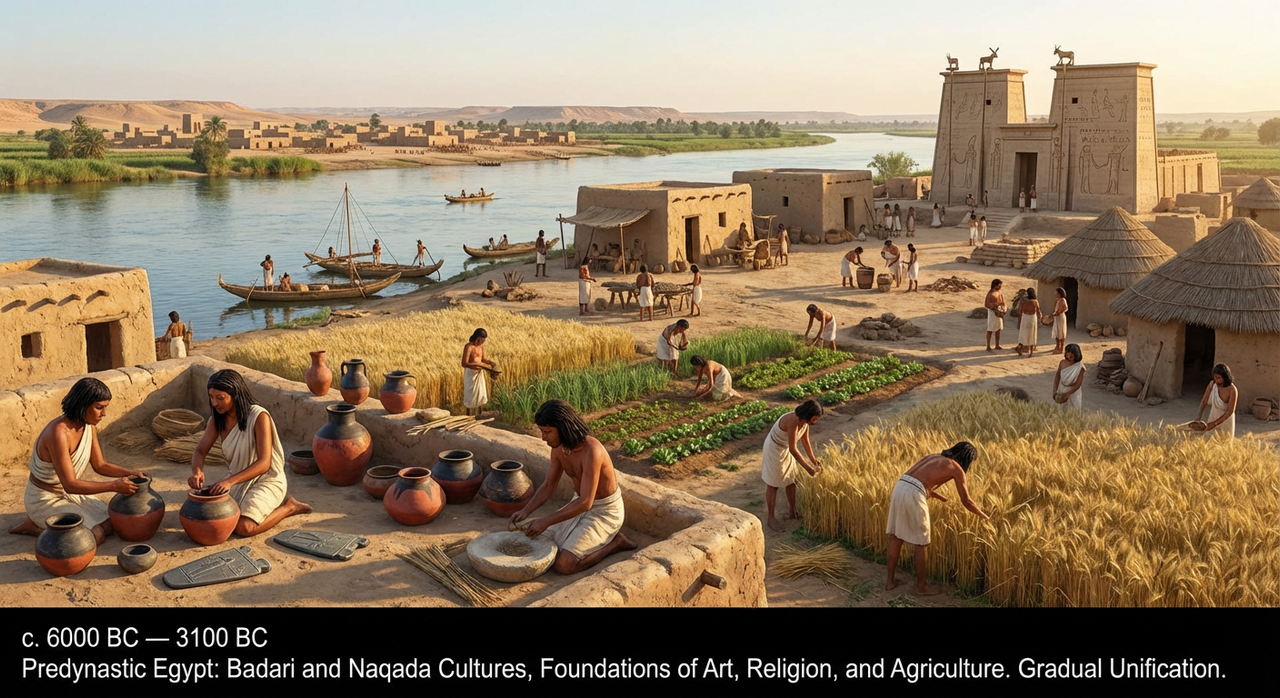
A Simple Life
Farmers lived in small villages close to the Nile. Their homes were built of sun-dried mudbrick, cool in the day and warm at night.
- The Home: Simple structures with flat roofs (used for sleeping in summer). Windows were small to keep out the heat. Inside, furnishings were sparse—woven mats, wooden stools, and pottery.
- Family Unit: The family was the center of life. Children worked alongside parents from a young age, tending to livestock or scaring birds away from crops.
Bound to the Nile
A farmer's life was dictated by the three seasons of the Nile:
Akhet (Flood)
Farming stops. Many farmers are drafted (Corvée) to work on state projects like pyramids.
Peret (Planting)
The busiest time. Plowing the fresh mud and sowing wheat, barley, and flax.
Shemu (Harvest)
Gathering the crops, threshing grain with oxen, and preparing for the tax collectors.
The State's Claim
Although free, farmers did not own the land they worked; it belonged to the Pharaoh, a temple, or a noble. In return for the right to farm, they owed a portion of their harvest as tax.
The Corvée System: This was a labor tax. During the flood season when farming was impossible, able-bodied men were drafted to clear canals, build temples, or quarry stone. While hard work, they were fed and housed by the state. This is how the Great Pyramids were built—by farmers, not slaves.