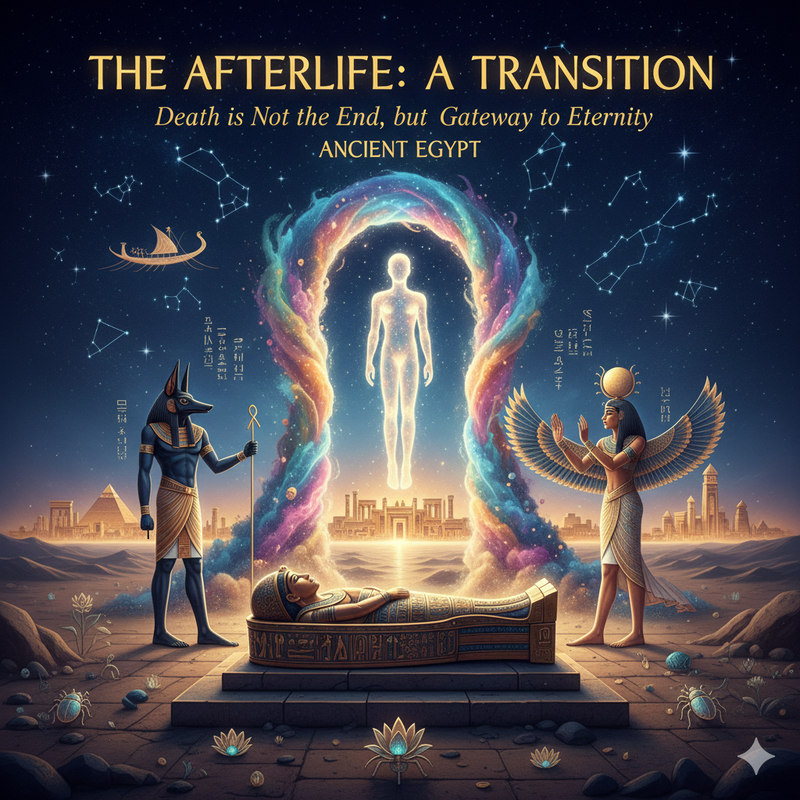
"To speak the name of the dead is to make them live again."
For the Ancient Egyptians, death was not a termination of existence but a necessary passage to a higher state of being. Life on earth was merely a prelude, a test of character governed by Ma'at (cosmic balance), preparing the soul for an eternal journey among the stars and the gods.
The Egyptian obsession with death—evident in their pyramids, tombs, and mummies—was, in reality, an obsession with life. They loved life so much they wished it to continue forever. This belief system drove the entire civilization, influencing architecture, art, and daily morality.
The Anatomy of the Soul
The Egyptians believed a human being consisted of several parts, both physical and spiritual. Death occurred when these parts separated; resurrection occurred when they were reunited.
The Ka (Life Force)
The vital spark created at birth. It required sustenance (food and drink) even after death. The tomb statues were often called "Ka statues," providing a physical place for this energy to reside.
The Ba (Personality)
Depicted as a bird with a human head, the Ba represented the unique personality of the individual. It could fly out of the tomb during the day to watch over the living but had to return to the mummy at night.
The Akh (The Transfigured Spirit)
When the Ka and Ba successfully reunited after passing judgment, the deceased became an Akh ("Effective One"), a spirit of light that lived eternally with the stars.
The Shadow (Sheut) & Name (Ren)
A person's shadow was always present and contained part of their essence. The Name was crucial; if a name was obliterated from a tomb, the person ceased to exist eternally.
Ma'at: The Cosmic Order
Ma'at was the goddess of truth, justice, balance, and order. She was the antithesis of Isfet (chaos). Every Egyptian's goal was to live a life "in Ma'at."
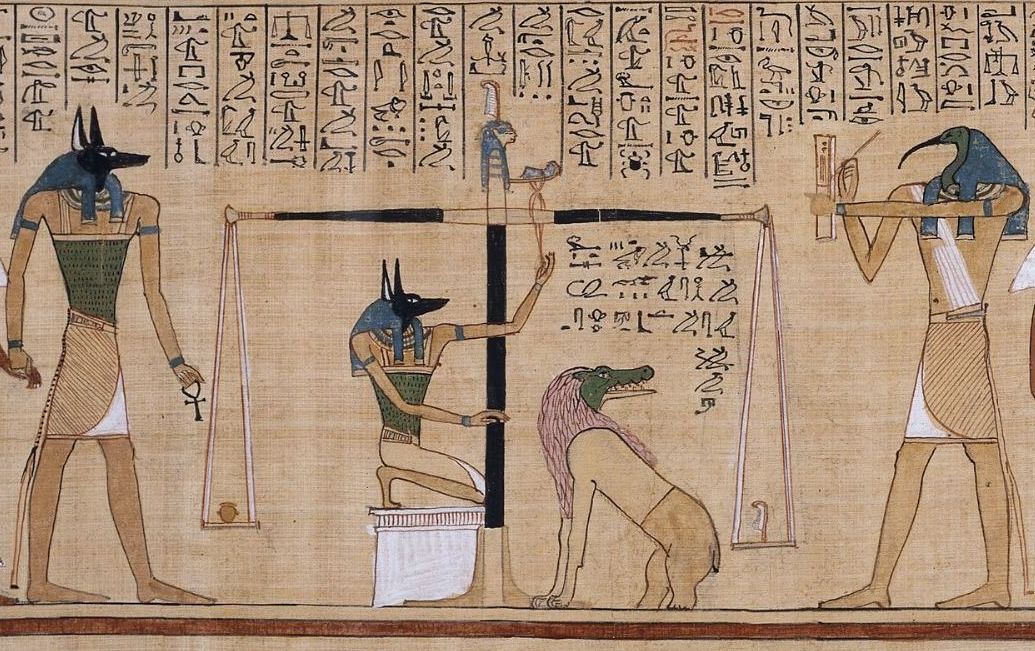
This concept was tested in the Hall of Two Truths. The heart of the deceased was placed on a scale against the Feather of Ma'at.
- Heavy Heart: Weighed down by sin and bad deeds. It was devoured by Ammit, leading to non-existence.
- Light Heart: Balanced with the feather. The deceased was declared "True of Voice" (Maa Kheru) and granted eternal life.
The Field of Reeds (Aaru)
What was the destination of this transition? It wasn't a cloud-filled heaven, but a perfected version of Egypt known as the Field of Reeds.
In Aaru, there was no sickness, death, or taxes. The crops grew tall, the Nile always flooded at the right time, and families were reunited. However, work was still required (farming, plowing). To avoid this eternal labor, the wealthy were buried with Shabti figures—small statues inscribed with spells to answer "Here I am!" when work was called for, taking the place of the deceased.
Preparing for Eternity
Because the afterlife was a continuation of life, Egyptians spent a lifetime preparing for it.
-
The Tomb: Called the Per-Ka (House of the Ka), it was built of stone to last forever, unlike earthly houses built of mudbrick.
-
Grave Goods: Furniture, jewelry, food, wine, and games (like Senet) were buried with the dead to ensure comfort in the next world.