"O you who opens the ways, O you who opens the paths... Open a path for me, that I may pass."
To the Ancient Egyptians, the afterlife was not a vague concept but a real, mapped destination full of dangers. To navigate the demons, gates, and rivers of fire in the Duat (Underworld), the deceased needed a guidebook.
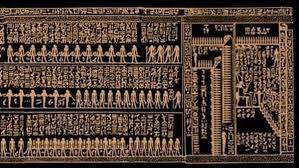
The literature of the afterlife evolved over 3,000 years. It began as exclusive spells for kings carved on pyramid walls and evolved into illustrated papyrus scrolls available to anyone who could afford them. These texts were essentially "survival guides" for eternity.
The Evolution of the Guidebooks
1. The Pyramid Texts (Old Kingdom)
The oldest religious texts in the world (c. 2400 BC). Carved onto the walls of the burial chambers of kings like Unas and Teti at Saqqara.
- Purpose: To help the King ascend to the sky to join the Indestructible Stars and the sun god Ra.
- Format: Vertical columns of hieroglyphs painted in blue or green. No illustrations.
- Exclusivity: Only for the Pharaoh.
2. The Coffin Texts (Middle Kingdom)
After the collapse of the Old Kingdom, the afterlife was "democratized." Nobles and officials began painting spells on their wooden coffins.
- Innovation: Included the first maps of the underworld (The Book of Two Ways) and emphasized the dangers of the journey (traps, demons).
- Concept: Every deceased person became "an Osiris," not just the king.
3. The Book of the Dead (New Kingdom)
Known to the Egyptians as Pert em Hru ("Coming Forth by Day"). Written on papyrus scrolls and placed in the tomb or coffin. It consisted of nearly 200 spells.
- Spell 125: The most famous section, describing the Weighing of the Heart. The deceased must recite the "Negative Confession" (e.g., "I have not stolen," "I have not lied") before 42 judges.
- The Outcome: If the heart is lighter than the feather of Ma'at, the soul enters Paradise (Field of Reeds). If heavier, it is devoured by Ammit, the Devourer.
The Royal Books of the Underworld
While commoners used the Book of the Dead, the New Kingdom Pharaohs (in the Valley of the Kings) decorated their tombs with highly complex, illustrated texts describing the nightly journey of the sun god Ra.
The Amduat
"That Which Is In the Afterworld." It divides the night into 12 hours. It describes Ra sailing his solar barque through the river of the underworld, battling the chaos serpent Apophis in the 7th hour, and being reborn at dawn.
The Book of Gates
Similar to the Amduat, but focuses on the massive gates separating the hours of the night. Each gate is guarded by a fearsome deity (with names like "Swallower of Sinners"). The deceased must know the name of the guardian to pass.
Other Mystical Texts
-
The Book of Caverns: Focuses on the punishments of the enemies of Ra (the damned) in deep pits and cauldrons of fire—conceptually similar to Hell.
-
The Book of the Heavenly Cow: Explains why Ra left the earth and ascended to the sky on the back of the sky-cow Nut, separating the divine from the human world.