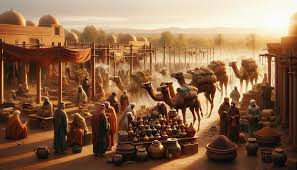
"Egypt was a land without coins, but it was rich in trade. Merchants (Shuty) were the vital connectors, moving goods from the heart of Africa to the Mediterranean, ensuring that the temples had incense and the people had linen."
In Ancient Egypt, the economy was based on redistribution and barter. Merchants and Traders played a crucial but often overlooked role in this system. They facilitated the exchange of goods between villages and conducted long-distance trade for exotic resources like cedar, lapis lazuli, and incense, operating under the watchful eye of the state.
The Local Market: Value without Money
In local markets, merchants exchanged surplus goods. A fisherman might trade fish for a pair of sandals, or a farmer might trade grain for oil.
The Deben
To standardize value, Egyptians used a unit of weight called the Deben (usually copper, about 91 grams). Goods were priced in Debens. You wouldn't pay with a piece of copper, but you would know that a sack of wheat was worth 1 Deben and a shirt was worth 5 Debens, making the trade fair.
Agents of the Pharaoh
Most large-scale trade was state-sponsored. Merchants acted as agents for the Pharaoh or the great temples.
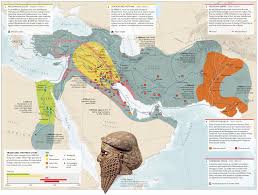
- Byblos (Lebanon): Expeditions brought back massive Cedar logs for building ships and temple doors, as Egypt lacked good timber.
- Punt: Dangerous voyages down the Red Sea returned with myrrh trees, frankincense, gold, and exotic animals for the royal zoo.
- Nubia: The source of gold, ivory, ebony, and panther skins.
Status in Society
The status of a merchant varied significantly.
- The Petty Trader: Often seen as little more than a peddler, traveling the Nile on a small skiff.
- The State Merchant: A highly respected official entrusted with the King's wealth. They led major expeditions and could become very wealthy, though they never reached the social height of the Scribes who audited them.