A Journey That Blessed a Nation
The Flight of the Holy Family into Egypt is one of the most profound events in Christian history, a story of refuge, miracles, and divine providence. Fleeing the tyranny of King Herod, Joseph, the Virgin Mary, and the infant Jesus sought sanctuary in Egypt, a land that had long been a place of asylum. Their journey, which lasted for over three years and covered more than 2,000 kilometers, is not just a biblical account but a living tradition, etched into the landscape of Egypt itself. The path they traveled has sanctified the land, leaving behind a trail of churches, monasteries, and wells that still draw pilgrims from around the world.
In 2017, Pope Francis officially recognized the path as a Christian pilgrimage site, and significant efforts are underway to have it designated as a UNESCO World Heritage route.
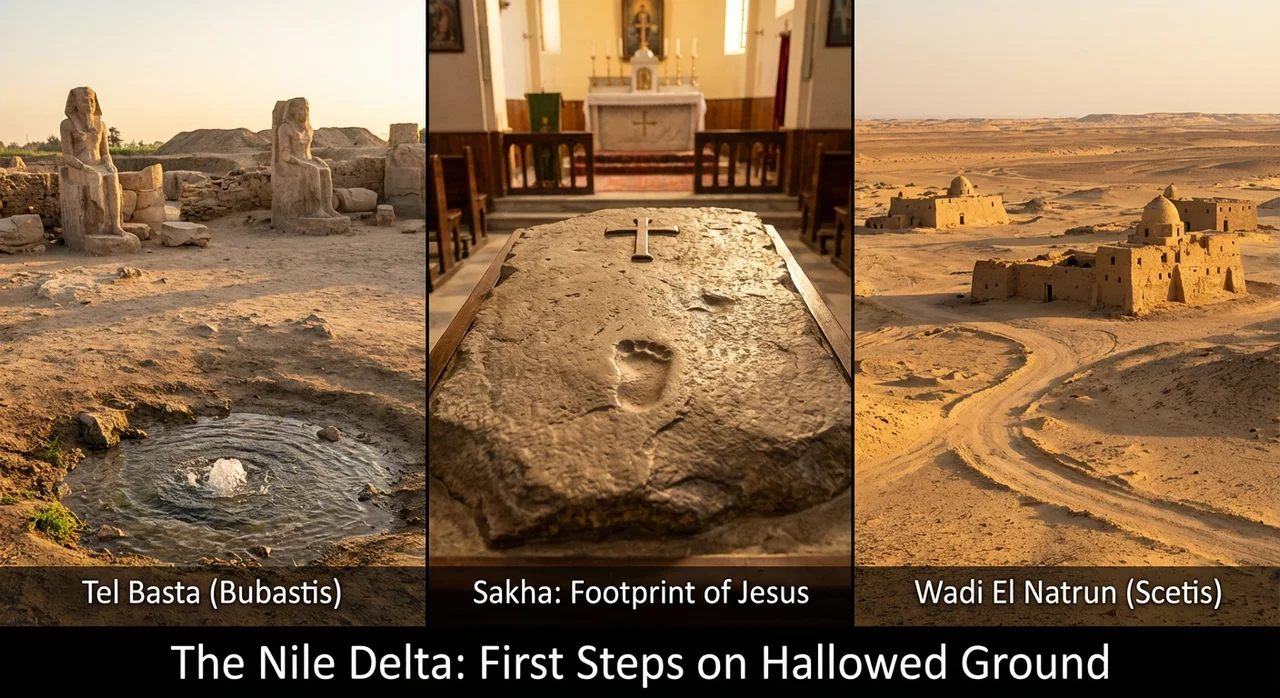
The Nile Delta: First Steps on Hallowed Ground
The family entered Egypt through the Sinai desert, arriving at Farama (ancient Pelusium) in the Eastern Nile Delta. Their journey then took them through the Delta, where their presence is remembered at several key locations:
- Tel Basta (Bubastis): Here, it is said that the infant Jesus caused a water spring to well up from the ground. Upon their arrival, the pagan statues of the city crumbled, fulfilling the prophecy of Isaiah: "Behold, the Lord is riding on a swift cloud and is about to come to Egypt; The idols of Egypt will tremble at His presence."
- Sakha: This town is famously home to a rock bearing the footprint of the child Jesus, which was preserved for centuries before being rediscovered. The site is now home to the St. Mary's Coptic Orthodox Church.
- Wadi El Natrun (Scetis): This vast desert valley, which the family crossed, would later become the birthplace of Christian monasticism, home to great saints like St. Macarius and containing some of the oldest monasteries in the world.
Sanctuary in Matareya and Old Cairo
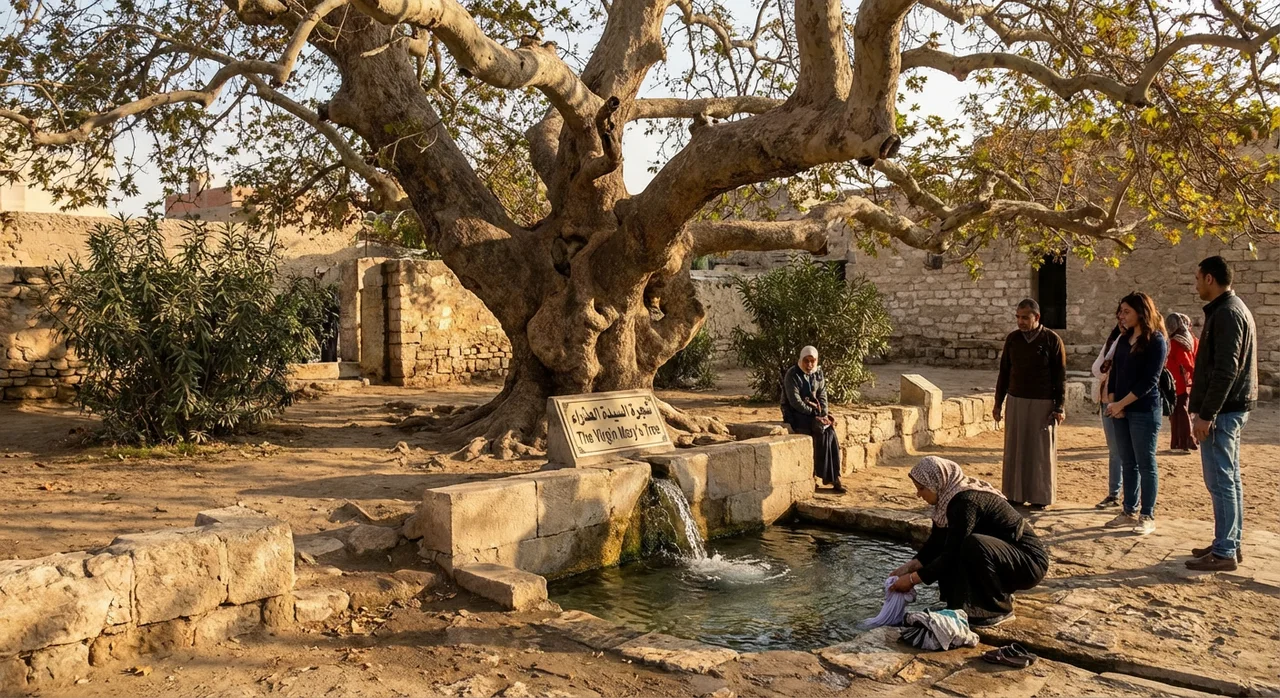
The journey continued south towards what is now modern Cairo. In the suburb of Matareya, the family took shelter under a sycamore tree, which became known as the "Tree of the Virgin Mary." It is believed that Jesus again caused a spring to erupt here, and Mary washed his clothes in its water. The spring's water was said to make the balsam plants in the area particularly fragrant.
Their most significant stay was in the area now known as Coptic or Old Cairo. They took refuge in a cave, and over this sacred spot, the Church of Saints Sergius and Bacchus (Abu Serga) was built. The cave, which can still be visited today in the church's crypt, is the spiritual heart of Coptic Cairo and a focal point of the entire pilgrimage path.
The Journey Up the Nile to "The Second Bethlehem"
From Cairo, the family traveled up the Nile into Upper Egypt. At Gabal al-Tayr ("Mountain of the Birds"), a large rock detached from the mountain and was about to fall on their boat. The infant Jesus is said to have reached out his hand, stopping the rock, and leaving his palm print upon it. A monastery was later built on this site.
Their journey culminated at what is now the Monastery of Al-Muharraq in the Assiut governorate. It is believed that the Holy Family lived here for six months and five days, the longest period they spent at any single location in Egypt. The altar stone of the monastery's ancient church is said to be the very spot where the infant Jesus rested.
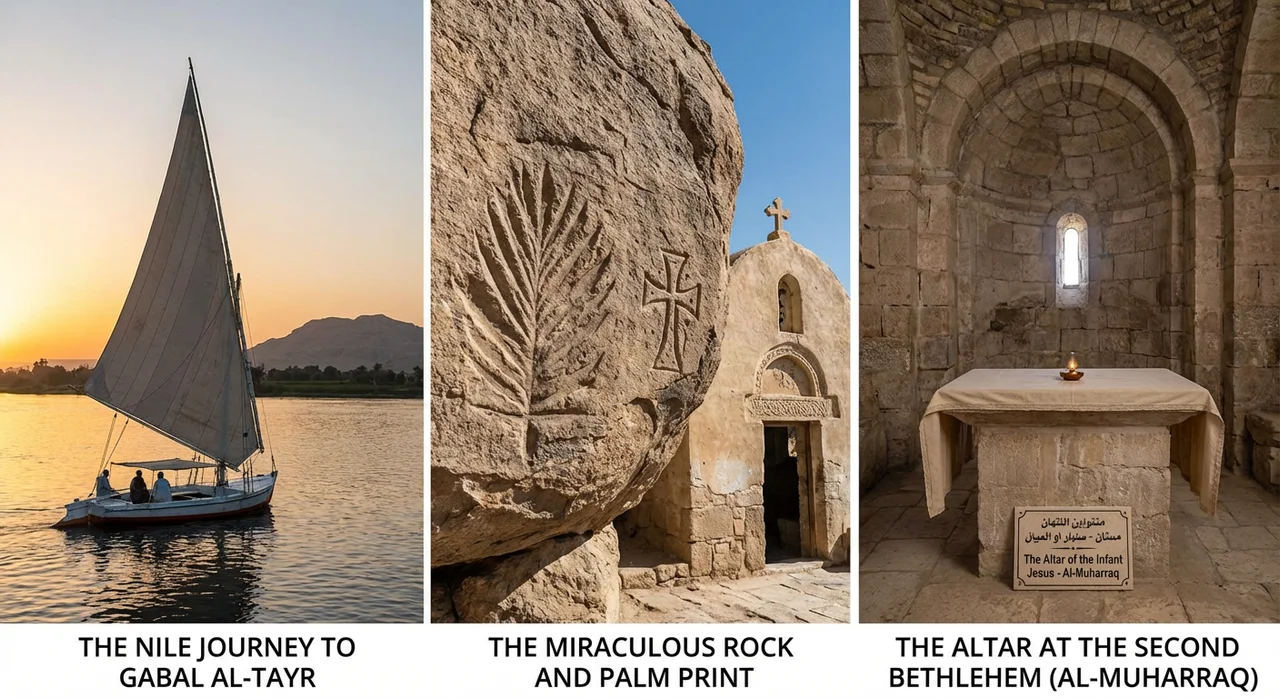
Because of their long stay, Deir al-Muharraq is considered by many Copts to be a "Second Bethlehem." An angel is said to have appeared to Joseph here, telling him of Herod's death and instructing him to return to Israel, thus marking the end of their flight.