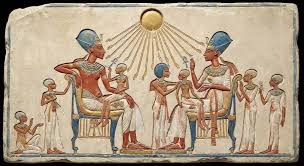
"For 3,000 years, Egyptian art was static, idealized, and rigid. Then came Akhenaten. Suddenly, art became alive, fluid, and shockingly intimate. The gods were gone, replaced by the sun's rays, and the Pharaoh was no longer a god of stone, but a human father kissing his children."
Amarna Art refers to the distinct style of art created during the reign of Pharaoh Akhenaten (18th Dynasty) at his new capital, Akhetaten (modern Amarna). It represents a radical break from the traditional Egyptian artistic canon, characterized by a sense of movement, naturalism, and often exaggerated physical features.
Under Akhenaten, the traditional canon was discarded. Art became naturalistic and "human." The Pharaoh was shown with elongated features and in intimate family scenes, breaking thousands of years of artistic convention to reflect the direct worship of the Aten.

Breaking the Canon
Traditional Egyptian art used a grid system to ensure perfect proportions. Akhenaten abandoned this. He encouraged artists to depict what they saw (or perhaps what he wanted them to see as "truth" or Ma'at).
Physical Distortions
Figures, especially the King, are shown with elongated skulls, long necks, narrow chests, pot bellies, and wide, feminine hips. Scholars debate if this reflects a medical condition (like Marfan syndrome) or a religious symbolism representing the Aten as both mother and father of creation.
The Hands of the Aten
In previous art, gods were human or animal-headed. In Amarna art, the god is the abstract sun disk (Aten). Its rays descend, ending in tiny human hands that offer the Ankh (symbol of life) to the noses of the Royal Family.
Intimacy and Emotion
Before Amarna, Pharaohs were depicted smiting enemies or standing stoically before gods. Akhenaten changed this entirely.
The Family Scenes: We see Akhenaten and Nefertiti sitting on cushions, bouncing their daughters on their knees, or kissing them. We see the family grieving at the death of princess Meketaten. This level of private emotion and domesticity had never been seen in royal art before, and was never seen again.
Famous Masterpieces
-
The Bust of Nefertiti: Found in the workshop of the sculptor Thutmose, this painted limestone bust is the most famous work of Amarna art. It exemplifies the refined, elegant, and realistic style of the later Amarna period. (Currently in Berlin).
-
The Boundary Stelae: Giant rock-cut monuments defining the city limits, showing the King and Queen worshipping the Aten with their daughters.
The Return to Tradition
After Akhenaten's death, the style did not vanish immediately but softened. In the tomb of Tutankhamun, we see a blend—the "Amarna influence" is visible in the boy king's belly and the intimacy of the scenes on his golden throne, but the traditional gods returned. By the time of Horemheb and the Ramesside kings, the rigid, idealized style of the past was fully restored, and Amarna art was buried.