Basic Identity
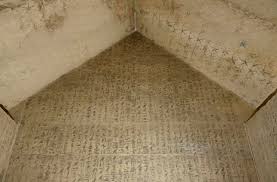
Unas (also spelled Wenis) is the pivotal last king of the Fifth Dynasty. While his political power was waning, his religious innovation changed Egyptian history forever. He is the first pharaoh to inscribe the interior of his pyramid with the famous Pyramid Texts.
| Name Meaning | “The One Who Exists” or “The Opener” |
|---|---|
| Titles | King of Upper & Lower Egypt |
| Dynasty | Fifth Dynasty (End) |
| Reign | c. 2375–2345 BCE (Approx. 30 Years) |
The Theological Revolution
Unas is historically significant not for his wars or buildings, but for his theology. He shifted the focus of the royal afterlife from the "Silent Tomb" (plain walls) to the "Speaking Tomb." By carving spells into stone, he ensured that his resurrection would be guaranteed by magic, independent of priests.
End of an Era
He succeeded Djedkare Isesi and was succeeded by Teti, the founder of the Sixth Dynasty. Unas likely died without a male heir, leading to a smooth transition to his son-in-law Teti. His reign marks the bridge between the high solar cult of the 5th Dynasty and the Osiris-centric cult of the 6th.
Decentralization
Politically, the central authority of the Pharaoh was weakening. Provincial governors (Nomarchs) were gaining power and building their own lavish tombs. The economy was strained, possibly by climate change (famine scenes appear in his causeway), yet Unas maintained stability through religious orthodoxy.
Magic in Stone
The texts are not narratives but operational spells. They are meant to be "spoken" by the reading of the hieroglyphs. They include hymns to the sun god, threats against snakes, and declarations of the king's power. The script itself was considered dangerous; signs of dangerous animals (like scorpions) were often mutilated in the carving to prevent them from harming the king.
Ascension
The primary goal was Ascension. The texts provided the "ladder" for Unas to climb to the sky. They declare: "Unas flies away from you, O men. He is not of the earth, he is of the sky." This marked a shift from the earlier belief that the king became a star to a more complex union with both Ra and Osiris.
The Cannibal Hymn
One of the most shocking and famous parts of Unas's texts is the "Cannibal Hymn." It describes Unas hunting, cooking, and eating the gods themselves! This Aggressive Magic was metaphorical: by eating the gods, Unas absorbed their magic (Heka), their spirits (Akhu), and their power, becoming the supreme being in the universe whom no one could oppose.
The Small Pyramid
Located at Saqqara, the Pyramid of Unas (Nefer-Isut-Unas) is physically small (only 43m high) and ruined on the outside. Its core was loose rubble, unlike the solid stone of Giza. However, the interior is a masterpiece of preservation, with the pristine white alabaster walls highlighting the blue text.
Realism in Art
While the pyramid is small, the causeway leading to it was magnificent. Reliefs found there show scenes of daily life, hunting, and most notably, images of famine victims—emaciated Bedouins or Egyptians suffering from hunger. This rare "social realism" in royal art suggests a period of hardship or environmental stress.
Stellar Theology
Unas's religion emphasized the Northern Sky. The texts guided his soul to the "Imperishable Stars" (circumpolar stars). While he joined Ra during the day, his ultimate destiny was to become a star that never sets, watching over Egypt eternally from the heavens.
A 3,000-Year Tradition
Unas started a tradition that would last for millennia. The Pyramid Texts evolved into the Coffin Texts of the Middle Kingdom and finally the Book of the Dead in the New Kingdom. Every Egyptian who later hoped for an afterlife owes a debt to Unas, who first wrote down the map to eternity.
📌 Comprehensive Summary
👑 Name: Unas (The Opener)
🕰️ Era: 5th Dynasty (End)
⚔️ Key Achievement: The First Pyramid Texts
🪨 Monument: Pyramid of Unas (Saqqara)