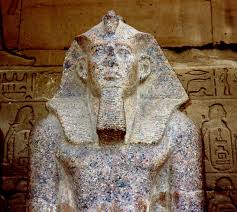
Basic Identity
Sobekhotep IV (Khaneferre) stands as the last powerful ruler of the 13th Dynasty, a period often dismissed as chaotic. Ruling for about a decade, he brought a brief but brilliant renaissance of royal authority to a fragmenting Egypt, proving that strong leadership could still exist without a royal bloodline.
| Throne Name | Khaneferre (“The Manifestations of Ra Appear”) |
|---|---|
| Personal Name | Sobekhotep (“Sobek is Satisfied”) |
| Dynasty | 13th Dynasty |
| Reign | c. 1730–1720 BCE (Approx. 10 Years) |
The Exception to the Rule
In a dynasty where kings often ruled for only months, Sobekhotep IV reigned for a decade. He is significant for temporarily restoring the prestige of the pharaoh. His numerous monuments, found from the Delta to Nubia, attest to a centralized administration that was still functioning effectively despite the looming threat of the Hyksos.
A Kingdom in Flux
He ascended the throne during the Second Intermediate Period's early phase. While the capital at Itjtawy still controlled the country, provincial power was growing. The rapid turnover of kings suggests that the real power lay with the powerful Viziers and the military elite, who selected kings based on ability rather than birth.
The Commoner King
Sobekhotep IV was not of royal blood. His father, Haankhef, was a "God's Father" (a priest), and his mother, Kemi, was a commoner. He proudly displayed his non-royal parentage on his monuments, signaling a major ideological shift: the office of kingship had become meritocratic, accessible to the capable elite.
Divine Election
Lacking a royal father, Sobekhotep IV legitimized his rule through theology. He emphasized his selection by Amun-Ra and his devotion to the gods. By presenting himself as the "chosen one," he bypassed the need for a royal pedigree, replacing bloodline with divine favor.
The Bureaucratic State
The survival of the state depended on its bureaucracy. Under Sobekhotep IV, the administration was efficient. Taxes were collected, and temples were funded. The continuity of officials—families of scribes and viziers serving multiple kings—provided the stability that the short-lived monarchs could not.
A Builder King
He was an active builder. He commissioned works at Karnak, adding to the temple of Amun, and at Medamud. His most significant contributions were at Abydos, the cult center of Osiris, where he built a chapel and dedicated his colossal statue, linking his reign to the god of the afterlife.
Unifying Faith
Conservative Classicism
Art from his reign marks a return to the idealized style of the early Middle Kingdom, abandoning the harsh realism of Senusret III. His statues show a calm, youthful face, projecting an image of serenity and order (Ma'at) in a time of underlying political tension.
Defensive Diplomacy
Foreign policy was defensive. Egypt maintained trade with Nubia and the Levant, attested by scarabs found in Palestine. However, there were no great wars of conquest. The goal was to secure borders and maintain the flow of luxury goods essential for royal display.
Holding the Line
There is no record of major invasions during his reign. The army remained loyal and capable of policing the borders. The fortifications built by earlier kings still held, providing a shield behind which Sobekhotep could govern in peace.
Fading Prosperity
The agricultural system of the Fayum was still productive, and state granaries were active. While the economy was not as robust as under Amenemhat III, there is no evidence of famine. It was a period of stagnation rather than collapse.
The Slide into Chaos
His death marked a turning point. He was followed by a series of weak, short-lived kings (like Sobekhotep V and VI). Central authority began to evaporate, and regional rulers in the Delta (the Hyksos precursors) began to assert independence, leading eventually to the division of Egypt.
Strength vs. Survival
| King | Senusret III | Sobekhotep IV |
|---|---|---|
| Authority | Absolute / Military | Bureaucratic / Religious |
| Lineage | Royal Blood | Commoner Origin |
| Legacy | Empire Builder | Preserver of State |
📌 Comprehensive Summary
👑 Name: Sobekhotep IV (Khaneferre)
🕰️ Era: 13th Dynasty (Peak)
⚔️ Significance: Stability amidst Fragmentation
🪨 Monument: Colossus at Abydos