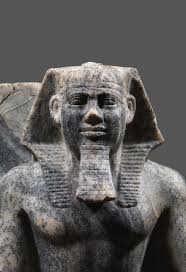
Basic Identity
Sahure is regarded as one of the most successful and influential kings of the Old Kingdom, initiating Egypt's first golden age of international trade and artistic refinement.
| Name Meaning | “He who is close to Ra” |
|---|---|
| Titles | King of Upper & Lower Egypt, Son of Ra |
| Dynasty | Fifth Dynasty (Old Kingdom) |
| Reign | c. 2487–2475 BCE (Approx. 13 Years) |
A Golden Age
Sahure’s reign represents the consolidation of Fifth Dynasty power. He transformed the ideological revolution of his predecessor (Userkaf) into active state policy, marking a peak in artistic refinement and the expansion of Egypt's influence beyond its borders through peaceful trade rather than war.
Royal Lineage
He succeeded Userkaf and was likely his son or close relative. He was succeeded by Neferirkare Kakai. This smooth succession ensured political stability, allowing the state to focus on monumental building and foreign expeditions without internal strife.
Solar Devotion
Sahure continued the elevation of Ra, prominently using the title "Son of Ra." However, he balanced this solar worship with traditional beliefs, honoring other deities in his mortuary temple. This inclusivity strengthened the unification of the state religion.
The Lost Sun Temple
Like Userkaf, Sahure is known to have built a sun temple named Sekhet-Re ("The Field of Ra") at Abu Ghurab. Although its exact location has not been fully identified or excavated like Userkaf's, textual evidence confirms its importance in the solar cult of the time.
The Pyramid of the Ba
Sahure chose Abusir as his burial site, establishing it as the royal necropolis of the 5th Dynasty. His pyramid, named Kha-ba-Sahure ("The Rising of the Ba of Sahure"), though smaller than Giza's, was built with a high-quality limestone casing and an elaborate temple complex.
Architectural Elegance
The complex included a valley temple, a causeway, and a mortuary temple. The mortuary temple was exceptionally elaborate, featuring new architectural elements like granite palmiform columns and walls covered in over 10,000 square meters of finely carved reliefs.
The Art of Narrative
Reliefs from Sahure’s complex are masterpieces of the Old Kingdom. They introduced narrative art, depicting specific historical events like the return of the fleet, the counting of foreign tribute, and the king hunting in the desert. This set a new standard for royal propaganda art.
Global Trade Network
Sahure expanded Egypt’s reach through peaceful expeditions. He sent ships to Punt (likely modern Eritrea/Somalia) to bring back myrrh, electrum (gold-silver alloy), and exotic wood. He also maintained strong trade links with Byblos in Lebanon for cedar wood.
Architectural Innovation
One of his lasting contributions to architecture was the extensive use of the Palmiform Column. Carved from red granite, these columns imitated the trunk and fronds of a palm tree, symbolizing fertility and endurance. They became a staple of Egyptian temple design for millennia.
Military Activity
While his reign was largely peaceful, limited military actions were undertaken in the Sinai to protect turquoise and copper mines from Bedouin raids. Reliefs show the traditional "smiting of the enemy" scenes, ensuring the security of Egypt's borders and trade routes.
Wealth of the Two Lands
The economy thrived on trade revenues and agricultural surplus. The wealth generated from foreign expeditions funded the elaborate temple construction and supported the growing bureaucracy and priesthood, creating a cycle of prosperity.
Efficient Bureaucracy
Sahure strengthened the central administration while promoting capable officials. Unlike the 4th Dynasty where high posts were reserved for princes, Sahure allowed non-royals to rise to power based on merit, increasing the efficiency of the government.
Divine Communion
Depictions show Sahure in intimate communion with the gods. He is shown being suckled by goddesses or embraced by deities, reinforcing his divine status not as a distant god-king, but as a beloved son of the pantheon supported by the divine family.
A Stable Rule
Ruling for approximately 13 years, Sahure had enough time to complete his major monuments and implement his foreign policy fully. His reign is often cited as the high point of the Fifth Dynasty's political and economic power.
Death and Burial
Sahure was buried in his pyramid at Abusir. His funerary cult remained active for centuries, a testament to his popularity and the respect he commanded from future generations. The complex served as a model for all subsequent pyramids in the region.
Historical Legacy
Sahure is remembered as the "Golden Age" ruler of the 5th Dynasty. He established Abusir as a royal site, created the first documented global trade network, and raised Old Kingdom art to new heights of naturalism and detail.
Evidence in Stone
His reign is well-documented through the Palermo Stone (royal annals), his extensive pyramid texts, and the beautifully preserved reliefs from his mortuary temple, which provide some of the best insights into Old Kingdom life.
Importance in History
Sahure represents the ideal balance of religion, economy, and statecraft. He proved that Egypt's greatness lay not just in the size of its pyramids, but in the reach of its ships and the sophistication of its culture.
📌 Comprehensive Summary
👑 Name: Sahure (He who is close to Ra)
🕰️ Era: 5th Dynasty (Old Kingdom)
⚔️ Key Achievement: Naval Expeditions to Punt & Byblos
🪨 Monument: Pyramid at Abusir