Basic Identity
Qakare Ibi is a shadowy figure from the Eighth Dynasty, a time when the centralized power of the Old Kingdom had fractured. He is notable for attempting to maintain the royal tradition of pyramid building during an era of severe economic and political decline.
| Throne Name | Qakare (“The Ka of Ra Appears”) |
|---|---|
| Personal Name | Ibi |
| Dynasty | Eighth Dynasty |
| Reign | c. 2160–2130 BCE (Short, 2-4 Years) |
The Last Echo
His significance lies in his persistence. Despite ruling a fragmented kingdom with limited resources, Qakare Ibi managed to construct a pyramid at South Saqqara. This act was a powerful political statement, claiming legitimacy by continuing the architectural traditions of the great 6th Dynasty kings like Pepi II.
Sparse Records
He is one of the best-attested kings of the obscure 8th Dynasty. His name appears clearly in the Abydos King List (entry 53) and the Turin Canon. However, his primary monument—his small pyramid—is the only significant physical proof of his reign.
A Fractured Land
Qakare Ibi ruled during the early First Intermediate Period. The central government in Memphis had lost control over Upper Egypt, where powerful Nomarchs (governors) ruled as independent warlords. His authority likely extended only a few miles outside the capital of Memphis.
A Modest Monument
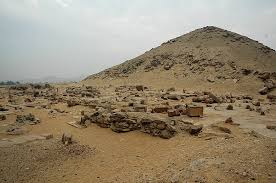
Located in South Saqqara near the causeway of Pepi II, his pyramid is tiny compared to his predecessors. It was built with a core of mudbrick and small stones, originally encased in fine limestone. Today, it is a small mound of sand, a poignant symbol of the diminished resources of the monarchy.
Simplified Rituals
His mortuary complex was extremely simple. There was a small mudbrick chapel on the east side for offerings, but no valley temple or long causeway has been found. This suggests his funerary cult was short-lived, likely abandoned as chaos engulfed Memphis shortly after his death.
Decline in Craftsmanship
The few relief fragments found at his site show a marked decline in artistic quality. The figures are less proportioned, and the carving is shallower than in the Old Kingdom. This reflects the loss of skilled royal artisans and the lack of state funding for art academies.
Clinging to Tradition
Despite his weak political power, Qakare Ibi held fast to the ideology of divine kingship. By taking the throne name "The Ka of Ra Appears," he linked himself to the sun god, asserting his right to rule as the son of Ra, even if his kingdom was crumbling around him.
The Contrast
| Feature | Old Kingdom (Pepi II) | Qakare Ibi |
|---|---|---|
| Pyramid Material | Stone Core | Mudbrick / Rubble |
| State Power | Centralized Empire | Local Memphis Rule |
| Art Style | High Classical | Provincial / Crude |
Chronological Marker
Discovered by Karl Richard Lepsius in the 19th century and later excavated by Gustave Jéquier, Ibi's pyramid is crucial for Egyptologists. It provides a concrete link between the end of the 6th Dynasty and the obscurity of the 8th, proving that the Memphite monarchy did not vanish instantly but faded slowly.
The Shift of Power
Qakare Ibi was likely one of the last kings to rule from Memphis with any pretense of tradition. Soon after his reign, power shifted definitively to Herakleopolis (Dynasty 9/10) and later to Thebes (Dynasty 11), leaving Memphis as a religious center but no longer the political heart of Egypt.
📌 Comprehensive Summary
👑 Name: Qakare Ibi
🕰️ Era: 8th Dynasty (First Intermediate Period)
⚔️ Significance: Last Pyramid with Texts in Saqqara
🪨 Monument: Pyramid of Ibi