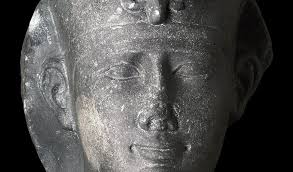
Basic Identity
Nectanebo II (Egyptian: Nakhthorheb) holds the melancholic title of the last native pharaoh of ancient Egypt. He was the third and final king of the 30th Dynasty. For 17 years, he presided over a prosperous and culturally vibrant nation, fighting valiantly to preserve Egypt's independence against the encroaching Persian Empire, until history finally turned against him.
| Throne Name | Senedjemibre ("He who pleases the Heart of Ra") |
|---|---|
| Dynasty | 30th Dynasty (Final Native Dynasty) |
| Reign | 360–343 BCE (Approx. 17 Years) |
| Capital | Sebennytos (Samannud) |
The End of an Age
Nectanebo II is historically pivotal as the final guardian of the pharaonic tradition. He successfully repelled a major Persian invasion in 351 BCE, proving that Egypt could still defend itself. He was also a prodigious builder, leaving his mark on temples throughout the land. His eventual defeat and flight marked the definitive end of over 2,500 years of indigenous Egyptian rule.
Chosen by Tradition
Nectanebo II rose to power during the failed campaign of his uncle, Teos, in Phoenicia. Supported by the priesthood (who were angry at Teos's taxes) and the army, he was declared king. Unlike Teos, Nectanebo II immediately focused on restoring the privileges of the temples, ensuring his reign was grounded in religious legitimacy and traditional Ma'at (order).
The Heroic Defense
In 351 BCE, the Persian King Artaxerxes III launched an invasion to reconquer Egypt. Nectanebo II, utilizing a network of Delta fortifications and the strategic skills of his Greek mercenary commanders (like Diophantus of Athens), successfully repelled the attack. This victory boosted Egyptian morale and prestige across the Mediterranean, delaying the inevitable for nearly a decade.
Buying Time
To defend Egypt, Nectanebo II relied heavily on Greek mercenaries, a double-edged sword that required vast sums of gold and silver. While the temple economy remained strong and agriculture stable, the strain of military spending was immense. The loyalty of these mercenaries often depended entirely on the pharaoh's ability to pay them.
The Tide Turns
In 343 BCE, Artaxerxes III returned with a larger, better-coordinated army. This time, the Persians engaged in psychological warfare and strategic maneuvering that outflanked the Egyptian defenses in the Delta. Crucially, the Greek commander of the Egyptian forces, Mentor of Rhodes, defected to the Persians. The Delta defenses collapsed, and the road to Memphis lay open.
A King Without a Kingdom
Realizing the war was lost, Nectanebo II did not surrender. He fled south to Memphis and then into Upper Egypt and finally Nubia, taking the royal treasury with him. He was never captured. His disappearance fueled legends; later romance tales claimed he fled to Macedonia and fathered Alexander the Great through magic, a myth that poetically linked the last pharaoh to the new conqueror.
The Final Arc
| King | Role | Legacy |
|---|---|---|
| Nectanebo I | The Restorer | Revival & Independence |
| Teos | The Aggressor | Overreach & Failure |
| Nectanebo II | The Last Guardian | Final Stand & Legend |
📌 Visitor-Friendly Summary
Nectanebo II was the last Egyptian to wear the Double Crown. After him, Egypt would never again be ruled by one of its own until the modern era.
👑 Key Title: The Last Pharaoh
🧱 Legacy: Temple of Philae
🌫️ End: Disappearance into Nubia