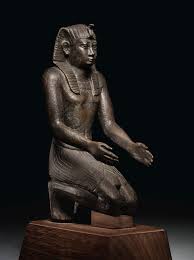
Basic Identity
Necho II (Egyptian: Nekau) was the second pharaoh of the 26th (Saite) Dynasty. Inheriting a unified and prosperous kingdom from his father Psamtik I, Necho II was a visionary ruler who turned Egypt's gaze outward. His reign is defined by ambitious military campaigns in the Near East and groundbreaking naval projects that were centuries ahead of their time.
| Throne Name | Wahibre ("Constant is the Heart of Ra") |
|---|---|
| Dynasty | 26th Dynasty (Saite Period) |
| Reign | c. 610–595 BCE (Approx. 15 Years) |
| Capital | Sais (Delta) |
A Visionary Ruler
Necho II is historically significant for his bold attempts to restore Egypt as an imperial superpower. He created Egypt's first true navy, attempted to dig a canal linking the Nile to the Red Sea (a precursor to the Suez Canal), and sponsored a legendary Phoenician expedition that reportedly circumnavigated the continent of Africa.
Empire Reborn?
Son of the great reunifier Psamtik I and Queen Mehtenweskhet, Necho II inherited a stable base but possessed a restless ambition. He aimed to fill the power vacuum left by the collapsing Assyrian Empire. His goal was to control the lucrative trade routes of the Levant and check the rising power of the Babylonians, effectively trying to recreate the New Kingdom empire.
Victory at Megiddo
In 609 BCE, Necho II marched into the Levant to support the remnants of the Assyrian army against Babylon. On his way, he was intercepted by King Josiah of Judah at Megiddo. Necho defeated and killed Josiah—an event recorded in the Bible (2 Kings 23:29). This victory allowed him to temporarily occupy Syria and install a puppet king in Jerusalem, briefly restoring Egyptian dominance in the region.
Egypt Takes to the Sea
Realizing that land dominance was blocked, Necho II turned to the sea. He recruited Greek sailors and built triremes, creating two fleets: one for the Mediterranean and one for the Red Sea. This strategic shift moved Egypt away from being a purely river-based power to becoming a maritime player, protecting trade routes and projecting power along the coasts.
The Canal of the Pharaohs
Necho II undertook a massive engineering project: digging a canal to connect the Pelusiac branch of the Nile to the Red Sea. According to Herodotus, 120,000 workers died in the attempt. Necho eventually abandoned the project after an oracle warned him that he was only "building it for the foreigner." It was later completed by the Persian king Darius I.
Around the Unknown Continent
In one of the most fascinating stories of antiquity, Herodotus reports that Necho II dispatched a fleet of Phoenician sailors to sail around Africa (then called Libya). They departed from the Red Sea and returned three years later through the Strait of Gibraltar. They reported that the sun was on their right hand as they sailed west—a detail that suggests the story is true, as this phenomenon is only possible in the Southern Hemisphere.
A Legacy of Vision
Necho II died naturally in 595 BCE and was likely buried at Sais, though his tomb has been lost. He left behind a wealthy nation that had expanded its horizons. While he failed to hold the Asian empire, his economic and naval policies laid the groundwork for the prosperity of the Late Period. He was succeeded by his son, Psamtik II.
The Saite Strategy
| King | Primary Focus | Result |
|---|---|---|
| Psamtik I | Reunification | Independence & Stability |
| Necho II | Expansion & Navy | Brief Empire & Trade Growth |
| Psamtik II | Consolidation | Diplomacy & Nubian Campaign |
📌 Visitor-Friendly Summary
Necho II was the pharaoh who looked to the sea when land empires rose. His vision reached beyond Egypt’s shores.
👑 Key Title: The Maritime Pharaoh
⚓ Innovation: Egypt's First Navy
🌍 Exploration: Circumnavigation of Africa