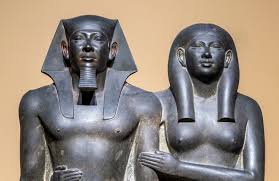
Basic Identity
Meryikare is one of the most intriguing figures of the First Intermediate Period. A king of the Herakleopolitan dynasty (9th/10th), he is remembered less for his monuments or conquests and more for his association with one of the greatest works of Egyptian literature.
| Throne Name | Meryikare (“Beloved is the Ka of Ra”) |
|---|---|
| Dynasty | Ninth / Tenth Dynasty |
| Capital | Herakleopolis Magna (Henen-nesut) |
| Reign | c. 2100 BCE (Approximate) |
The Ethical Ruler
Meryikare stands out as Egypt's "Philosopher King." His reign represents a shift in royal ideology from the divine, distant god-king of the Old Kingdom to a human, fallible ruler who must govern through justice (Ma'at) and political savvy rather than absolute power. He navigated the dangerous waters of civil war with the rising power of Thebes.
The Royal Instruction
His fame rests on the "Teaching for King Meryikare," a literary text written by his father (likely Khety III) advising him on how to be a good king. It is a masterpiece of political science, offering pragmatic advice on handling nobles, the army, and the gods. It is the Machiavelli's "Prince" of the ancient world, but with a conscience.
Lessons in Leadership
The text advises Meryikare to: "Do justice whilst thou endurest upon earth." It warns against trusting the poor (who might be rebellious) but also commands him to protect the widow and orphan. It emphasizes that a king's power relies on the loyalty of his officials and the benevolence of his rule, not just his bloodline.
A Divided Land
Meryikare ruled a divided Egypt. The north (Lower and Middle Egypt) was under his control, centered at Herakleopolis. The south (Upper Egypt) was controlled by the rival Theban dynasty (Intef kings). His reign was defined by the cold war and occasional skirmishes between these two power centers.
The Southern Threat
The text mentions conflicts over the sacred city of Abydos. Meryikare's father admits to sacking part of the necropolis, a sacrilege he regrets. Meryikare pursued a policy of containment, fortifying his southern border while trying to maintain peaceful coexistence where possible. He knew Thebes was a rising tide.
Cooperative Governance
Unlike the autocrats of the Old Kingdom, Meryikare had to negotiate his power. He ruled through a coalition of loyal Nomarchs (governors), particularly in Assiut (the shield of the north). His success depended on his ability to keep these powerful local lords happy and united against the south.
Restraint and Mercy
The Teaching advises against unnecessary bloodshed: "Punish with beatings, not with death." It suggests that a king who kills too easily creates more enemies. This reflects the precarious nature of his rule; he could not afford to alienate his subjects with tyranny. Stability required the appearance of benevolence.
Cultural Renaissance
Under the Herakleopolitans, the Per-Ankh (House of Life/Library) flourished. Despite the political chaos, this period saw a flowering of literature. Scribes produced works that questioned the meaning of life and the nature of the gods, laying the groundwork for the classical literature of the Middle Kingdom.
Faith and State
Meryikare continued to honor the traditional gods, particularly Ra and Osiris. He emphasized that offerings were less important than the character of the offerer: "More acceptable is the character of one upright of heart than the ox of the evildoer." This moral shift in religion is a hallmark of his era.
The Lost Tomb
Meryikare built a pyramid, named "Wadj-sut-Meryikare" (Flourishing are the Places of Meryikare), near Saqqara. Although it has not been definitively identified (possibly the "Headless Pyramid"), its existence proves he claimed the full heritage of the Memphite kings, even in diminished times.
Human vs. Divine
| Aspect | Old Kingdom King | Meryikare |
|---|---|---|
| Authority | Absolute / Divine | Negotiated / Moral |
| Focus | Monuments (Pyramids) | Wisdom (Texts) |
| Tone | Aloof / Perfect | Introspective / Humble |
The Fall of the North
Meryikare was likely one of the last strong kings of his line. After his death, the balance of power tipped decisively to Thebes. Mentuhotep II eventually conquered the north, ending the Herakleopolitan dynasty and reunifying Egypt, but the literary legacy of Meryikare survived the conquest.
A Legacy of Thought
The "Teaching for King Meryikare" predates the political philosophy of Plato and Aristotle by over a thousand years. It is one of the world's first treatises on the duties of a ruler, arguing that a king is judged by history and by God, not just by his power. It humanized the office of the Pharaoh.
📌 Comprehensive Summary
👑 Name: Meryikare (Beloved is the Ka of Ra)
🕰️ Era: First Intermediate Period
⚔️ Significance: The Philosopher King
📜 Legacy: The Teaching for King Meryikare