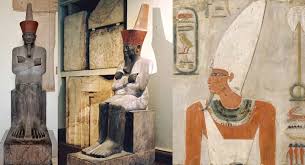
Basic Identity
Mentuhotep II (Nebhepetre) is one of the most celebrated pharaohs in Egyptian history. He is the warrior-king who ended the First Intermediate Period, reunified the country, and founded the Middle Kingdom, ushering in a new era of prosperity and art.
| Throne Name | Nebhepetre (“Lord of the Rudder of Ra”) |
|---|---|
| Horus Name | Sematawy (“Uniter of the Two Lands”) |
| Dynasty | 11th Dynasty |
| Reign | c. 2061–2010 BCE (51 Years) |
The Second Narmer
Mentuhotep II is often compared to Narmer (Menes) as a unifier. He inherited a divided kingdom, with Thebes controlling the south and Herakleopolis the north. Through decades of warfare, he crushed the northern dynasty, becoming the first king since the 6th Dynasty to rule a united Egypt.
A Kingdom at War
Upon ascending the throne in Thebes, he faced immediate threats. The northern kings of Herakleopolis were invading the Thinite nome (Abydos). His early years were spent securing his borders and rebuilding the Theban army into a force capable of total conquest.
The War of Reunification
Around his 14th regnal year, the war intensified. Mentuhotep launched a massive offensive northwards. He captured Abydos, Asyut, and eventually Herakleopolis itself. The fall of the northern capital marked the end of the civil war. He changed his Horus name to Sematawy to celebrate this victory.
Rebuilding the State
Victory was only the beginning. Mentuhotep II had to dismantle the power of the independent Nomarchs who had ruled during the chaos. He centralized the government in Thebes, created the post of "Governor of the North," and appointed loyal Theban officials to key positions across the country.
Rise of Amun & Montu
While he honored the war god Montu (the patron of his ancestors), Mentuhotep II also elevated Amun. During his reign, Amun began his ascent from a local deity to the "King of Gods." This religious shift would define the Middle and New Kingdoms.
Architecture of Eternity
He built his mortuary complex at Deir el-Bahari, a bay in the Theban cliffs. It was revolutionary. Unlike the hidden pyramids of the north, it was a terraced temple rising in steps, merging a tomb with a temple. It featured a central mound (possibly a pyramid or a primeval hill) surrounded by colonnades.
The Royal Cult
His temple was not just a tomb; it was a state institution. Statues of the king were worshipped there for centuries. The complex included tombs for his wives and key officials, re-establishing the king as the center of the afterlife for his court.
Meritocracy
Under Mentuhotep II, men of humble origins could rise to power through military service. His general, Intef, and his chancellor, Henenu, were powerful men who owed their status to competence, not just noble birth. This social mobility strengthened the new regime.
Middle Kingdom Art
His reign sparked a cultural revival. Art transitioned from the crude "provincial style" of the First Intermediate Period to the refined, elegant style of the Middle Kingdom. Reliefs from his temple show high-quality carving, with a return to classical proportions.
Restoring Borders
Mentuhotep reasserted Egyptian control over Nubia (Wawat) to secure gold and trade routes. He also launched expeditions to the Sinai for turquoise and to Punt for incense, reopening the international trade networks that had collapsed.
Two Unifiers
| King | Narmer (Menes) | Mentuhotep II |
|---|---|---|
| Role | First Unifier | Re-Unifier |
| Period | Early Dynastic | Middle Kingdom |
| Origin | Thinis | Thebes |
| Legacy | Founded the State | Restored the State |
📌 Comprehensive Summary
👑 Name: Mentuhotep II (Sematawy)
🕰️ Era: 11th Dynasty (Middle Kingdom)
⚔️ Achievement: Reunification of Egypt
🪨 Monument: Temple at Deir el-Bahari