Name and Meaning
Isis (Ancient Egyptian: Aset, Iset, or Ast) is the quintessential goddess of ancient Egypt. Her name, written with the hieroglyph of a seat or throne, literally means "The Throne."
| Ancient Egyptian Name | 𓊨𓏏𓆇 (3st) |
|---|---|
| Phonetic Pronunciation | Ah-set |
| Literal Meaning | “The Throne” |
| Cosmic Role | Magic (Heka), Motherhood, Kingship |
By personifying the throne, she was the mother of the King (Pharaoh). The Pharaoh was considered her child who sat upon the "throne" that she provided.
The Great of Magic
Isis was revered as Weret-Hekau ("Great of Magic"). Her power transcended the boundaries of life and death. She was the healer of the sick, the protector of the weak, and the ideal model of a loyal wife and devoted mother. Unlike many distant cosmic deities, Isis was compassionate and deeply relatable to the common people.
The Devoted Wife
The tragedy of Isis and Osiris is Egypt's most famous myth. After her husband Osiris was murdered and dismembered by his jealous brother Set, Isis did not despair. She traveled the length of Egypt, recovering his scattered body parts. Using her potent magic, she reassembled him and fanned the breath of life into his mummified body with her wings, resurrecting him just long enough to conceive their son, Horus.
Divine Motherhood
Isis gave birth to Horus in the secrecy of the Delta marshes (Chemmis) to hide him from Set. She raised him alone, curing him from scorpion stings and sickness with her magic. The imagery of Isis breastfeeding the infant Horus (known as Isis Lactans) became a powerful icon of divine love, influencing later representations of the Virgin Mary and Child.
The Secret Name of Ra
Isis gained her supreme magical power through cunning. She fashioned a snake from the earth and Ra's spittle, which bit the sun god. In agony, Ra was forced to reveal his Secret Name to Isis to be healed. By knowing his true name, Isis gained absolute power over the universe, becoming the "Mistress of the Gods."
Iconography & Symbols
Isis is depicted in various majestic forms:
- Throne Headdress: A woman wearing a seat/throne hieroglyph on her head.
- Solar Disk & Horns: In later periods, she adopted the cow horns and sun disk of Hathor.
- Winged Goddess: Shown with outstretched wings protecting Osiris or the Pharaoh.
- The Kite: She often transforms into a kite (a bird of prey) to mourn Osiris.
The Temple of Philae
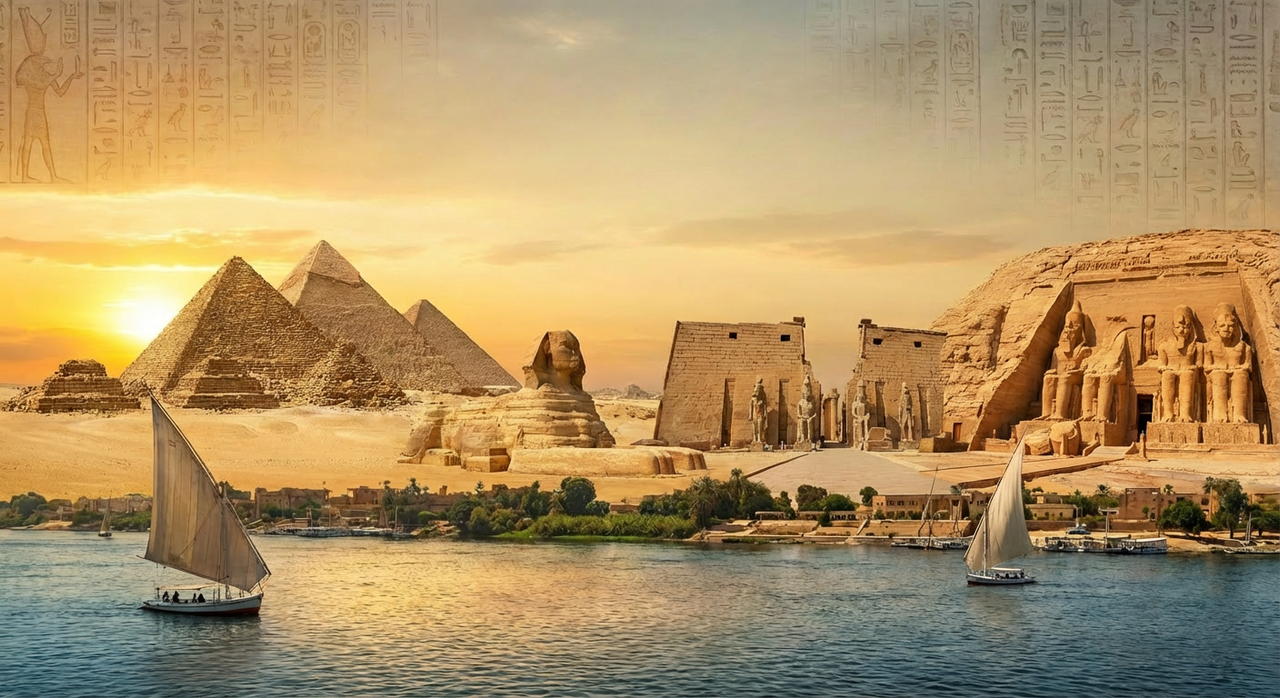
The island of Philae in Upper Egypt was the last great stronghold of the ancient Egyptian religion. The Temple of Isis there remained active until the 6th century CE, long after Christianity had spread throughout Egypt. It was believed to be one of the burial places of Osiris, where Isis wept annually to cause the Nile flood.
Greco-Roman Legacy
By the Greco-Roman period, the worship of Isis spread far beyond Egypt's borders to Rome, Greece, and even Britain. She became a universal "Mother of All," absorbing the attributes of other goddesses (Demeter, Aphrodite, Fortuna). The "Mysteries of Isis" promised initiates salvation and eternal life, making her one of the most popular deities of the ancient Mediterranean.
Encyclopedia Summary
| Primary Role | Goddess of Magic, Motherhood, Healing |
|---|---|
| Sacred Symbol | Tyet (Isis Knot), Throne |
| Cult Centers | Philae, Behbeit el-Hagar |
| Divine Son | Horus (The Living King) |
| Key Myth | Resurrection of Osiris |