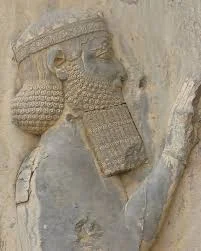
Basic Identity
Darius I, known as "The Great" (Old Persian: Darayavaush), was the third king of the Achaemenid Empire. While a foreigner, he ruled Egypt as a legitimate pharaoh of the 27th Dynasty for 36 years. His reign brought order after the chaos of conquest, transforming Egypt into a stable and prosperous satrapy within the first true world empire.
| Egyptian Name | Setutre ("Image of Ra") |
|---|---|
| Dynasty | 27th Dynasty (First Persian Period) |
| Reign | 522–486 BCE (Approx. 36 Years) |
| Empire | Persian (Achaemenid) |
A Ruler, Not Just a Conqueror
Darius I is historically distinguished from his predecessor Cambyses by his constructive approach to rule. He stabilized the vast Persian Empire, ruled Egypt with respect for its traditions, and completed major infrastructure projects. He is remembered in Egyptian history not as a tyrant, but as a "Lawgiver" who codified the legal system and restored order.
Order After Chaos
Coming to power after a dynastic crisis and widespread revolts, Darius had to fight to secure his throne. Once established, he reasserted control over Egypt. Unlike Cambyses, whose reputation suffered from religious insensitivity, Darius adopted a policy of "cultural intelligence," presenting himself as a legitimate successor to the pharaohs to win the support of the powerful priesthood.
Codifying the Law
One of Darius's most significant contributions was the codification of Egyptian law. He ordered a commission of wise men to compile the legal customs of Egypt into a single written code, available in both Demotic (for locals) and Aramaic (for the empire). This respect for local custom made him unique among foreign rulers and earned him high praise in later Egyptian tradition.
The Persian Pharaoh-Builder
Darius was an active builder. His most famous monument in Egypt is the Temple of Hibis in the Kharga Oasis, dedicated to Amun. It is the best-preserved temple from the Persian period and depicts Darius in traditional Egyptian garb worshipping local gods—a perfect example of cultural fusion. He also commissioned additions at Karnak and other shrines, proving his dedication to the role of pharaoh.
Efficiency & Prosperity
Egypt was governed as a satrapy (province), but local officials were largely retained. Darius reformed the tax system to be more predictable and standardized weights and measures to boost trade. Under his rule, Egypt became the granary of the Persian Empire and a key maritime base, enjoying a period of economic rationalization and stability.
A Model of Imperial Rule
Darius I died peacefully in 486 BCE and was buried in a rock-cut tomb at Naqsh-e Rostam in Persia. He left behind a legacy of tolerance and administrative genius. While later Persian kings like Xerxes would face rebellions due to harsher policies, Darius's reign proved that foreign power could coexist with respect for Egyptian identity, setting a standard for imperial governance.
The Persian Learning Curve
| Ruler | Style | Result |
|---|---|---|
| Cambyses II | Conquest & Force | Resentment & unrest |
| Darius I | Administration & Respect | Stability & Integration |
| Xerxes I | Repression | Rebellion & Decline |
📌 Visitor-Friendly Summary
Darius I was the foreign king who ruled Egypt like a pharaoh—and did it well. His reign proves that power can coexist with respect.
👑 Key Title: The Lawgiver
🏛️ Monument: Temple of Hibis
⚓ Achievement: The Red Sea Canal