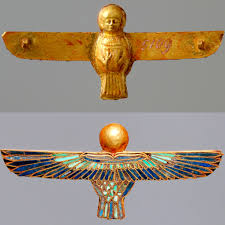
Definition & Concept
The Ba (Ancient Egyptian: bꜣ) is the most individualistic part of the Egyptian soul. While the Ka is life force, the Ba is Personality. It represents the unique character, intellect, and consciousness that makes a person who they are. Crucially, it is the part of the soul that has the power of movement.
| Hieroglyph | Human-headed bird (𓅽) |
|---|---|
| Meaning | Personality, Mobility, Manifestation |
| Function | Travels between Tomb and World |
| Requirement | Reunion with Body/Ka |
Consciousness in Flight
The Ba is dynamic, not static. It is described as being "active" and "effective." Unlike the Ka, which stays relatively close to the tomb to consume offerings, the Ba has the freedom to leave the tomb during the day, revisit places the deceased loved in life, and ascend to the sky to travel with the sun god Ra.
Identity Embodied
During life, the Ba inhabits the body, manifesting as a person's behavior and reputation. It is the sum of their memories and experiences. The Egyptians believed that even inanimate objects or gods could have a Ba; for example, the wind was considered the "Ba of Shu," and sacred animals were the "living Bas" of gods.
The Separation
At the moment of death, the Ba separates from the body. This separation is traumatic. The Ba flies away, often depicted as a bird leaving the mouth. However, the Ba cannot survive alone forever; it remains tethered to the physical body and must return to it periodically to rest and recharge, like a bird returning to its nest.
The Return at Night
Every night, the Ba must return to the tomb. It flies down the burial shaft to reunite with the mummy. This reunion creates the Akh (the glorified spirit). If the Ba cannot find the body (if it is destroyed) or cannot recognize it (if the name is lost), the resurrection fails. This is why preserving the mummy was so critical.
Divine Manifestations
Gods were not limited to one Ba. They possessed great "Bau" (plural). A god's Ba could manifest in many forms. For example, the Apis Bull was worshipped as the living Ba of Ptah, and the Ram of Mendes was the Ba of Osiris (or Ra). This concept allowed the infinite power of a god to be present in a specific, tangible object or creature on earth.
The Human-Headed Bird
The Ba is iconically depicted as a bird (usually a falcon or jabiru) with a human head and sometimes human arms. This hybrid image perfectly captures its dual nature: the bird body symbolizes the freedom to fly and transcend earthly limits, while the human head ensures the retention of personal identity, memory, and speech.
The Spiritual Ecosystem
The Ba does not function alone. It relies on the other components:
- Ka: Provides the vital energy/food the Ba needs.
- Body: Provides the physical anchor for the Ba's return.
- Shadow (Sheut): Often travels alongside the Ba as a protective double.
- Name (Ren): Calls the Ba into existence.
Spells of Transformation
The Book of the Dead contains numerous spells designed to protect the Ba. Some spells prevent the Ba from being trapped in the tomb or captured by demons. Others grant the Ba the power to transform into a swallow, a hawk, a phoenix, or a lotus, giving it camouflage and versatility in the dangerous terrain of the Duat.
Individualism in Death
The concept of the Ba reflects a strong sense of individualism in Egyptian culture. Death did not mean merging into a faceless cosmic ocean; it meant preserving who you are. The Ba ensured that the specific loves, hates, and memories of the deceased continued forever.
Psychology of the Self
The Ba anticipates modern psychological concepts of the "Self" or "Ego." It suggests that consciousness is distinct from biology but dependent on it. It acknowledges the human need for both freedom (flight) and belonging (the tomb/home).
Legacy
While Western culture often conflates "soul" into one word, the Egyptian distinction between Ba and Ka provides a more nuanced framework for understanding life. It distinguishes between the energy that animates us (Ka) and the personality that defines us (Ba), a distinction still relevant in philosophy and theology today.
Encyclopedia Summary
| Concept | The Ba (Personality/Soul) |
|---|---|
| Visual Symbol | Human-headed Bird |
| Key Ability | Movement between Worlds |
| Critical Moment | Reunion with Ka/Body at Night |
| Literary Work | Dispute between a Man and his Ba |