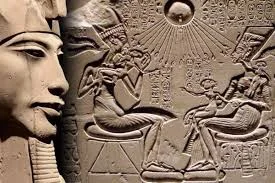
Basic Identity
Akhenaten is perhaps the most controversial and disruptive ruler in Egyptian history. Born Amenhotep IV, he changed his name to reflect his devotion to the Aten, the sun disk. His 17-year reign, known as the Amarna Period, represented a radical break from thousands of years of tradition.
| Royal Name | Akhenaten (“Effective for the Aten”) |
|---|---|
| Dynasty | 18th Dynasty (Amarna Period) |
| Reign | c. 1353–1336 BCE (Approx. 17 Years) |
| Capital | Akhetaten (modern Tell el-Amarna) |
The Great Disruptor
Akhenaten is important because he introduced the exclusive worship of a single god, the Aten, undermining the powerful priesthood of Amun. This move completely changed Egypt’s political balance and sparked an artistic revolution that produced some of the ancient world's most unique and intimate masterpieces.
A Controversial Family
Son of the magnificent Amenhotep III and Queen Tiye, he began his reign as Amenhotep IV. He was married to the legendary Nefertiti, with whom he had six daughters. The transition to his new faith was gradual; he initially followed traditional religion before elevating the Aten above all others.
The Aten Revolution
Akhenaten closed the temples of other gods, erased the name of Amun from monuments, and promoted the Aten—represented as a sun disk with rays ending in hands—as the sole creator. This new faith (Atenism) had no mythology; it focused on the visible sun as the source of all life, with the King as the sole intermediary between the god and the people.
Akhetaten: The Horizon of Aten
To escape the influence of Thebes, Akhenaten founded a new capital city in the desert: Akhetaten (modern Amarna). Dedicated exclusively to the Aten, it was built rapidly and defined by boundary stelae. It was a city of ideology, with open-air temples designed to let in the sunlight.
Art & Iconography
The Amarna Period is famous for its bizarre and beautiful art. Breaking from centuries of rigid convention, scenes depicted the royal family with intimacy and realism—kissing, eating, and playing with children. Akhenaten himself was portrayed with androgynous features (elongated skull, wide hips), emphasizing his unique status as the mother-father of creation.
Nefertiti & The Royal Cult
Queen Nefertiti held exceptional power, often depicted smiting enemies or officiating rituals alongside her husband. The royal family became the center of the cult; people worshipped Akhenaten and Nefertiti, who in turn worshipped the Aten. The succession remains debated, with mysterious figures like Smenkhkare appearing near the end.
The Erosion of Empire
While Akhenaten focused on religious reform, the empire suffered. The Amarna Letters reveal pleas from vassal kings in Canaan asking for military help against rising threats like the Hittites. Akhenaten’s inaction led to the loss of influence abroad and complaints from traditional bureaucrats at home.
Damnatio Memoriae
Akhenaten died young, leaving chaos behind. His successors, including Tutankhamun, returned to the old gods and abandoned Amarna. Later pharaohs like Horemheb dismantled his temples and erased his name from king lists, branding him "The Enemy of Akhetaten." His revolution was buried in the sands until modern archaeology revealed it.
📌 Visitor-Friendly Summary
Akhenaten was the pharaoh who tried to remake Egypt’s soul—and paid the price. No king was ever the same after his reign.
👑 Key Title: The Heretic King
☀️ Innovation: First Monotheism (Atenism)
🏛️ Legacy: Amarna Art & Nefertiti