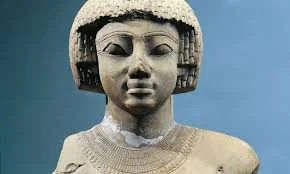
Basic Identity
Ahmose I (Ancient Egyptian: Iah-mes, meaning "The Moon is Born") is the legendary founder of the 18th Dynasty and the New Kingdom. He completed the war of liberation started by his father and brother, driving the Hyksos invaders out of Egypt and reuniting the Two Lands under Theban rule.
| Throne Name | Nebpehtyre (“Lord of the Strength of Ra”) |
|---|---|
| Dynasty | 18th Dynasty (Founder) |
| Reign | c. 1550–1525 BCE (Approx. 25 Years) |
| Capital | Thebes (Waset) |
The Dawn of Empire
His reign marks a pivotal turning point in world history. By expelling the Hyksos, Ahmose transformed Egypt from an isolated kingdom into an aggressive military power. He established the professional army and the imperial policy that would make Egypt the superpower of the ancient world for the next 500 years.
Born in War
He was the son of the martyr-king Seqenenre Tao and Queen Ahhotep I, and the brother of King Kamose. He ascended the throne as a child, likely around the age of ten, inheriting a kingdom at war. His early years were guided by the strong regency of his mother and grandmother, Tetisheri.
The Fall of the Hyksos
After reaching adulthood, Ahmose launched the final offensive. He marched north, blockaded the Hyksos capital of Avaris, and besieged it. After multiple assaults, the city fell. The Hyksos retreated into Canaan, but Ahmose pursued them, laying siege to their stronghold at Sharuhen for three years until they were utterly defeated.
The Warrior Regent
While Ahmose was fighting in the north, rebels tried to seize Thebes. His mother, Queen Ahhotep I, rallied the remaining troops and crushed the rebellion. A famous stele praises her as the one who "pacified Upper Egypt and expelled her rebels," acknowledging her crucial role in saving the dynasty.
The New Army
Ahmose fully modernized the Egyptian military. He adopted the superior weapons of the Hyksos—the horse-drawn chariot, the composite bow, and bronze khepesh swords—and turned them against his enemies. This created a permanent, professional standing army, replacing the old system of local levies.
Reclaiming Nubia
After securing the north, he turned south. He led campaigns into Nubia (Kush) to reclaim the gold mines lost during the Second Intermediate Period. He defeated the Kingdom of Kush and re-established Egyptian control as far south as the Second Cataract, appointing a new viceroy called the "King's Son of Kush."
One Nation Again
For the first time in a century, all of Egypt obeyed one pharaoh. Ahmose reorganized the administration, rewarding loyal military families with land and offices. This created a new aristocracy based on service to the king rather than hereditary provincial power.
Amun the Victor
Ahmose attributed his victories to Amun-Ra of Thebes. He showered the Karnak temple with spoils of war, elevating Amun to the status of "King of the Gods." This began the symbiotic relationship between the monarchy and the Amun priesthood that would define the New Kingdom.
Honoring the Ancestors
In a touching act of piety, Ahmose erected the Donation Stela at Abydos to honor his grandmother, Queen Tetisheri. He endowed a pyramid and a cult for her, acknowledging her as the matriarch who kept the family's spirit alive during the darkest days of the occupation.
Rebuilding the Land
With peace restored, he focused on economy. He repaired neglected canals, reopened limestone quarries at Tura and turquoise mines in Sinai, and resumed trade with Byblos. The "Tempest Stela" records his efforts to rebuild temples and pyramids destroyed by a massive storm and flood, symbolizing his role as the restorer of order.
A Secure Throne
He was succeeded by his son, Amenhotep I. Unlike the chaotic successions of the past, this transfer of power was smooth and stable. Ahmose left behind a unified, wealthy, and militarily strong nation, ready for the glories of the Thutmosid era.
The Pyramid at Abydos
Ahmose built a pyramid at Abydos (a cenotaph, not a tomb), the last royal pyramid built in Egypt. His actual mummy was found in the Deir el-Bahari cache (DB320). It shows a man of about 35, physically strong but unscarred, suggesting he commanded from a chariot rather than the front lines.
The Liberation Trilogy
| King | Seqenenre Tao | Kamose | Ahmose I |
|---|---|---|---|
| Role | The Martyr | The Warrior | The Victor |
| Strategy | Resistance | Offensive | Total Conquest |
| Result | Death in Battle | Strategic Gains | Unification |
📌 Comprehensive Summary
👑 Name: Ahmose I (Lord of Strength)
🕰️ Era: 18th Dynasty (Founder)
⚔️ Achievement: Expulsion of Hyksos
🪨 Monument: Pyramid/Cenotaph at Abydos